More than 30 people were wounded in the shooting, attributed by the authorities to a “group of extremists” who are still at large.
At least seven people have been killed and some 34 others wounded in a terrorist attack on a Greek Orthodox church in Jordan. The authorities have described the suspects as “extremists” who fled the scene and are still on the loose.
The slaughter unfolded on Friday afternoon in the village of Hmoud in western Karak Governorate, which is home to a sizable Christian community in the majority-Muslim country.
A group of at least three assailants arrived at the local St. George’s Church, where a funeral ceremony was underway. The gunmen attacked the mourners, with the shooting reportedly lasting for about 15 minutes before the suspects drove away from the scene unhindered. No group has claimed responsibility.
CCTV footage from the scene shows the attackers, two of whom were armed with handguns and the third with an assault rifle, firing at people desperately trying to flee the scene, tripping over pews and each other in the process. Highly graphic footage shows the suspects repeatedly shooting wounded victims in the head as they lay on the ground, apparently to finish them off.
Jordanian King Abdullah II has vowed to “confront the terrorist act that targeted Karak with the harshest penalties.” The country’s interior minister, Mazen al-Faraya, confirmed during a news conference that the suspects still remain at large, describing the attackers as a “group of extremists” without providing any further detail.
He described the attack as “painful and horrific,” stating it was “unparalleled in the history of the Hashemite Kingdom of Jordan,” which has rarely seen such levels of violence.
The massacre has prompted a major response from the authorities, with Hmoud flooded by assorted security forces. Tightened security measures have also been implemented in the city of Karak, where the bulk of the wounded were transferred for treatment.
The king visited the victims at a hospital later on Friday to show support, promising to punish the perpetrators. Abdullah could be seen arriving at the facility in a military field uniform, accompanied by a large security detail.
Police investigating a fatal crash in Blenheim yesterday are searching for a witness that may be able to help understand the circumstances of the crash.
Around 10.55am, Police were called to the crash at the intersection of Wither and Howick Roads involving a car and a truck. Sadly, one person died at the scene.
CCTV from the area has captured a cyclist seen travelling the same direction as the truck on Wither Road just before the crash.
“We believe the cyclist could have either witnessed the truck passing by or may have seen or heard the crash.
“If this is you, or you recognise who this may be, please get in touch – any information you have could significantly assist in our enquiries.”
Anyone else with any information about this crash is also urged to contact police.
Contact police on 105, either over the phone or using the service online.
French President Emmanuel Macron has denounced a series of shootings near Paris as a racially motivated terrorist attack after a gunman killed one person and wounded five others, including a 12-year-old girl.
The violence unfolded on Friday across Trappes and neighbouring La Verrière, where a 39-year-old suspect allegedly fired repeatedly from a moving vehicle over approximately 15 minutes, targeting people near a medical centre, petrol station and playground. Three victims sustained serious injuries, with the young girl reportedly suffering eight gunshot wounds requiring surgery.
Macron condemned the violence as an assault on France’s fundamental values, saying victims had been singled out because of their ethnicity or religion.
Although investigators have yet to establish a definitive motive, France’s anti-terrorism prosecutor has opened an investigation into suspected terrorism-related murder with possible racial or religious aggravating factors. The alleged gunman, previously known to police but not intelligence authorities, was arrested following the attacks, while a family member was also detained.
🇫🇷 #France: Several drive-by shootings took place today in Trappes and La Verrière, near Paris.
One person was killed and five others wounded, including three seriously. A 12-year-old girl is among the injured.
The suspected attacker has been arrested, and France’s National Anti-Terrorist Prosecutor’s Office has taken over the investigation.
The motive remains unclear. Regional reports say the attacker fired randomly at people from a vehicle.
NZ Loyal is challenging the conventional thinking around taxation.
Our 1% Transaction Tax proposal is backed by research into the underlying concept, including the work of Professor Edgar L. Feige, and by our own New Zealand-focused calculations.
We believe the numbers stack up. We believe New Zealand can do better. And we believe the proposal deserves to be judged on its merits, not dismissed because it challenges the status quo.
The goal is simple: less complexity, less bureaucracy, more money in people’s pockets, and an economy that works for New Zealanders.
The question shouldn’t be “Why change?” It should be “Why settle for a system that could be better?”
Download NZ Loyal Transaction Tax Policy Solution PDF here.
In an effort to break years of political deadlock, the UN has set up a ‘4+4’ committee, bringing together Libya’s rival factions.
The long-awaited agreement between Libya’s rival factions was finally signed on August 30 under the auspices of the United Nations Support Mission in Libya (UNSMIL). On that day, the mission gathered the two negotiating delegations at its Tripoli headquarters to formalize the text ironed out during earlier rounds of talks in Rome and Tunis. UNSMIL invited foreign diplomats, media representatives, and Libyan delegations to the event, where UN Special Representative Hanna Tetteh hailed the accord in her opening remarks as “another important milestone in Libya’s journey toward stability and national unity.”
This, however, bore a resemblance to previous diplomatic milestones – most notably the 2015 Libyan Political Agreement (LPA) signed in Skhirat, Morocco. The LPA established the rules of the political game in the fractured country; rules to which none of the domestic political actors seem fully committed, yet from which none completely depart. In a sense, Skhirat remains the ultimate reference point for every subsequent UN roadmap in Libya.
In the vacuum left by the 2011 NATO intervention and the brutal murder of Muammar Gaddafi, Libya has seen a continuous parade of diplomatic accords. Yet the fundamental problem has never been a shortage of roadmaps, but rather their consolidation into nationally accepted political facts that elites cannot simply manipulate at will.
The August 30 agreement has two main parts. The first is restructuring the High National Elections Commission (HNEC), the agency in charge of organizing elections. In practice, this means replacing its leadership to settle disputes over appointments and regional representation. Although these changes were long delayed by regional quotas and political patronage stemming from the 2015 Skhirat agreement, rivals can still negotiate them with relative ease.
The 24-month timeline to hold elections was also established. However, the countdown is designed to govern the transition only once a single, unified executive authority and unified national institutions are established to oversee the voting process.
The second component concerns the central objective of UNSMIL’s latest roadmap: agreeing on viable election laws, an issue on which the UN has failed to make meaningful progress since the collapse of the planned 2021 elections.
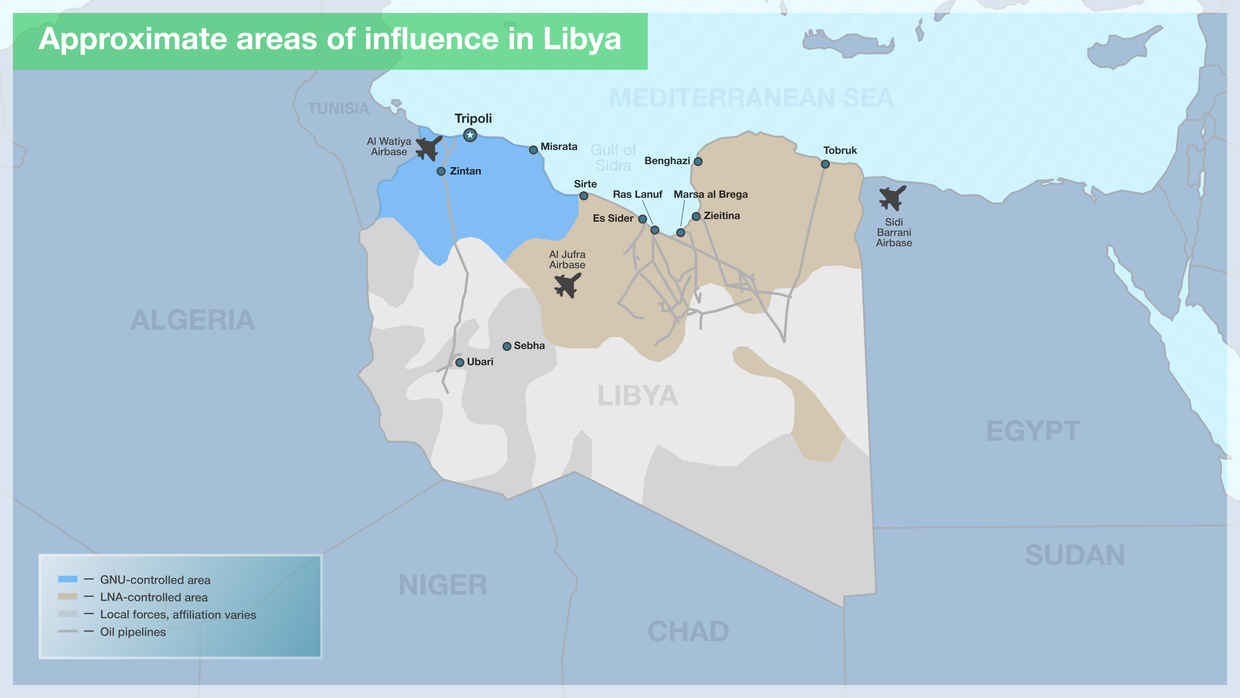
Libya remains divided between rival power centers: the Government of National Unity (GNU), led by Abdul Hamid Dbeibah in Tripoli, the western part of the country, and the Libyan National Army (LNA) command in the east led by General Khalifa Haftar. These exist alongside two political institutions: the Tripoli-based High Council of state (HCS) and the eastern-based House of Representatives (HoR). To break the deadlock, UNSMIL established a smaller negotiating group known as the ‘Smaller Convening’, or the ‘4+4’. It brings together eight representatives from the GNU, Haftar’s military command, the HCS, and the HoR.
This mechanism directly mirrors the ill-fated 2021 Geneva process, Libyan Political Dialogue Framework, which ultimately hardened Libya’s institutional divide and brought the country closer to a permanent de facto partition than at any point since its formal unification in 1951. The UN Security Council issued a delayed presidential statement endorsing the deal, and thus repeating a familiar ritual that seems to elevates elite compromise over structural reform. Seeking to seize the political initiative, Speaker Aguila Saleh brought the 4+4 framework to the HoR floor for an immediate vote where it was approved by the majority of members.
The ‘4+4’ format developed alongside (and ultimately eclipsed) UNSMIL’s broader Structured Dialogue. Even before those conclusions were finalized, UNSMIL was already facilitating a parallel ‘Smaller Convening’ behind closed doors – the 4+4 was born. As Hanna Tetteh told the Security Council on June 18, the explicit goal of this smaller format was to bypass the paralysis between the legislative bodies and force an accord on the roadmap’s first two steps: reconstituting the elections commission’s board and resolving the contested electoral framework. Thus, the ‘4+4’ was a deliberate strategy to concentrate decision-making among the political and military figures deemed capable of enforcing an outcome.
After the HoR approved the agreement on September 14, the HCS formally rejected it on October 5, along with the related laws and decisions issued by the House, arguing that they bypassed the constitutional, legal and consensual frameworks governing the political process. In her October 14 briefing to the UN Security Council, Tetteh acknowledged this rejection but maintained that the agreement offers an actionable path to presidential and legislative elections under a single, unified executive authority within 24 months.
She also announced that UNSMIL would meet members of the 4+4 committee later this month to examine the possibility of establishing a broadly representative national mechanism under Article 5 of the agreement in consultation with the Security Council. This proposal implicitly acknowledges that the 4+4 mini-dialogue alone may not be sufficient to advance the roadmap.
Another significant development is the removal of Aguila Saleh as speaker of the HoR after 12 years in office. On October 7, the eastern-based parliament elected Al-Salhin Abdulnabi as his successor, ending Saleh’s long tenure amid growing discontent over his leadership. The change is particularly significant because Saleh had been accused of being a prominent obstacle to previous attempts to move Libya’s political process forward. Tetteh acknowledged the transition, expressing her appreciation to Saleh for “his leadership and engagement over his 12-year tenure of service.” Her emphasis on the change in parliamentary leadership is noteworthy: The departure of a figure long associated with resistance to political roadmaps could create new room for maneuver, although it does not by itself guarantee that the House will cooperate with the UN initiative or that the entrenched political divisions will be overcome.
Ultimately, the structural core of the August 30 agreement rests on a fundamental contradiction: 4+4 does not equal 1. Combining four delegates from Tripoli’s political-institutional structures, including representatives of the HCS, with four delegates representing the eastern power structure in Benghazi does not produce a unified state. Instead, it seems to function as a shared enterprise in which rival political elites, rather than competing to build a single nation, recognize that their mutual survival depends on dividing power and maintaining exclusive control over the state apparatus.
Setting a 24-month timetable neither offers a guarantee that elections will actually occur; instead, it grants entrenched factions another two years of status quo protection without imposing any penalty for non-compliance.
Still, the UN Security Council appeared to endorse the latest UNSMIL plan. Following Tetteh’s briefing on October 14, the Council reaffirmed its support for the agreement, despite concerns over its implementation and the High Council of State’s rejection.
By prioritizing elite consensus over an enforceable constitutional baseline, the international community risks continuing to repeat a flawed equation. Until UNSMIL and foreign powers break this cycle and align their strategy with the Libyan public’s demand for genuine democratic renewal, every new agreement risks becoming another monument to the status quo. In the end, the ‘4+4’ framework offers no viable fallback or alternative path forward if it fails.
Last week, the UNSC did not vote to extend UNSMIL’s mandate, which expires on October 31. However, this is largely a technicality, since the Council has already approved UNSMIL’s roadmap.
US Secretary of War Pete Hegseth has reportedly warned that wagers on military outcomes could expose operations and distort the troops’ judgment.
US troops have been warned against using inside information to bet on prediction markets, the Associated Press has reported, citing a directive issued by US Secretary of War Pete Hegseth, who said such wagers could expose military plans and influence operational decisions.
The memo, dated Tuesday and reviewed by AP, covers platforms such as Polymarket and Kalshi, where users wager on real-world events, including elections and military action.
The directive bars the use of both classified material and other official information unavailable to the public, with violators facing disciplinary action or criminal charges under military or federal law.
“Our enemies watch movements in these markets,” Hegseth wrote. “When an American service member, intelligence professional, or other Department civilian engages in a financial transaction on a military outcome, they create a signal.”
He also warned that personal financial interests could compromise professional judgment, arguing that “a logistician with money riding on a strike date has an interest in that date” and “an analyst with a position on an outcome has an interest in that outcome.”
The directive follows the prosecution of a US Special Forces soldier accused of profiting from advance knowledge of the January operation to kidnap Venezuelan President Nicolas Maduro.
Prosecutors allege that Master Sergeant Gannon Ken Van Dyke used information obtained through his involvement in planning and executing the raid to place more than $32,500 in Polymarket bets, earning over $400,000.
Most of the wagers were allegedly placed on January 2, hours before the attack on Caracas. Van Dyke has pleaded not guilty.
The controversy has extended beyond the military. Newly created Polymarket accounts placed suspiciously timed bets shortly before Trump announced an April US-Iran ceasefire, generating hundreds of thousands of dollars in profits. The White House later warned staff against trading on confidential information.
Trump’s former teleprompter operator was separately ordered to surrender more than $107,500 in profits and pay a $65,000 fine after regulators found he used advance access to presidential speeches to bet on which words Trump would say.
The scandals have intensified scrutiny of prediction markets, which several US states have accused of sidestepping gambling laws and consumer protections. The Trump administration, however, has argued that the platforms should remain regulated by federal financial authorities rather than under individual states’ gambling laws.
The president’s family also has business ties to the industry. Donald Trump Jr. serves as a strategic adviser to Kalshi and holds an investment in Polymarket through his venture firm, 1789 Capital.
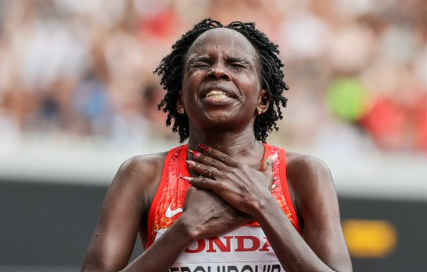
Kenyan distance-running star Peres Jepchirchir has been provisionally suspended after an out-of-competition drug test returned a positive result for the banned performance-enhancing substance EPO.
The 33-year-old Olympic and world marathon champion provided the sample in Kenya before claiming victory at the Sydney Marathon on 30 August 2026, where she finished more than three minutes ahead of her nearest rival in 2:18:31.
EPO increases red blood cell production, potentially improving endurance by boosting oxygen delivery to muscles. Jepchirchir, who won Olympic gold in Tokyo and the 2025 World Championships, has enjoyed a distinguished career that includes victories at the New York, Boston and London marathons, alongside multiple world records in the half-marathon.
The Athletics Integrity Unit has imposed a provisional suspension while the doping case proceeds.
The Athletics Integrity Unit has provisionally suspended reigning world marathon champion 🇰🇪 Peres Jepchirchir after an out-of-competition sample collected in Kenya returned an adverse analytical finding for EPO. The sample was taken before her Sydney Marathon win.
One of the most decorated marathoners of this generation:
• Olympic champion, Tokyo 2021 🥇
• Reigning world champion, Tokyo 2025 🥇
• Four-time World Marathon Major winner: New York (2021), Boston (2022), London (2024), Sydney (2026) 🏆 🏆 🏆 🏆
• Her 2:16:16 to win the 2024 London Marathon was the women’s-only world record at the time
• She owns a personal best of 2:14:43 from Valencia 2025
She can request analysis of the B sample, and the case proceeds to a charge or is closed depending on what follows.
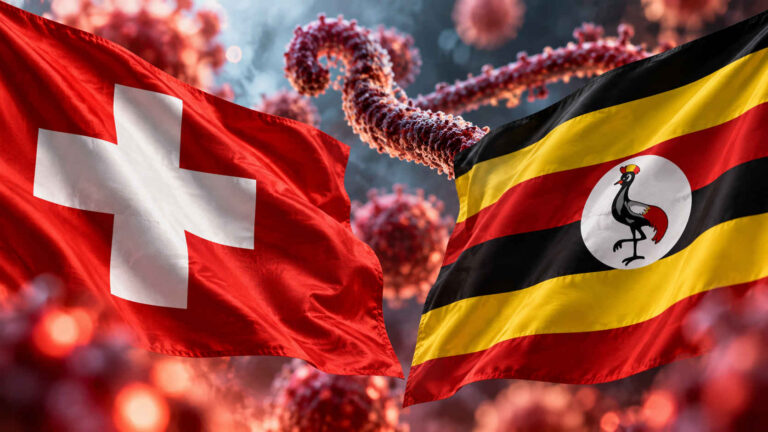
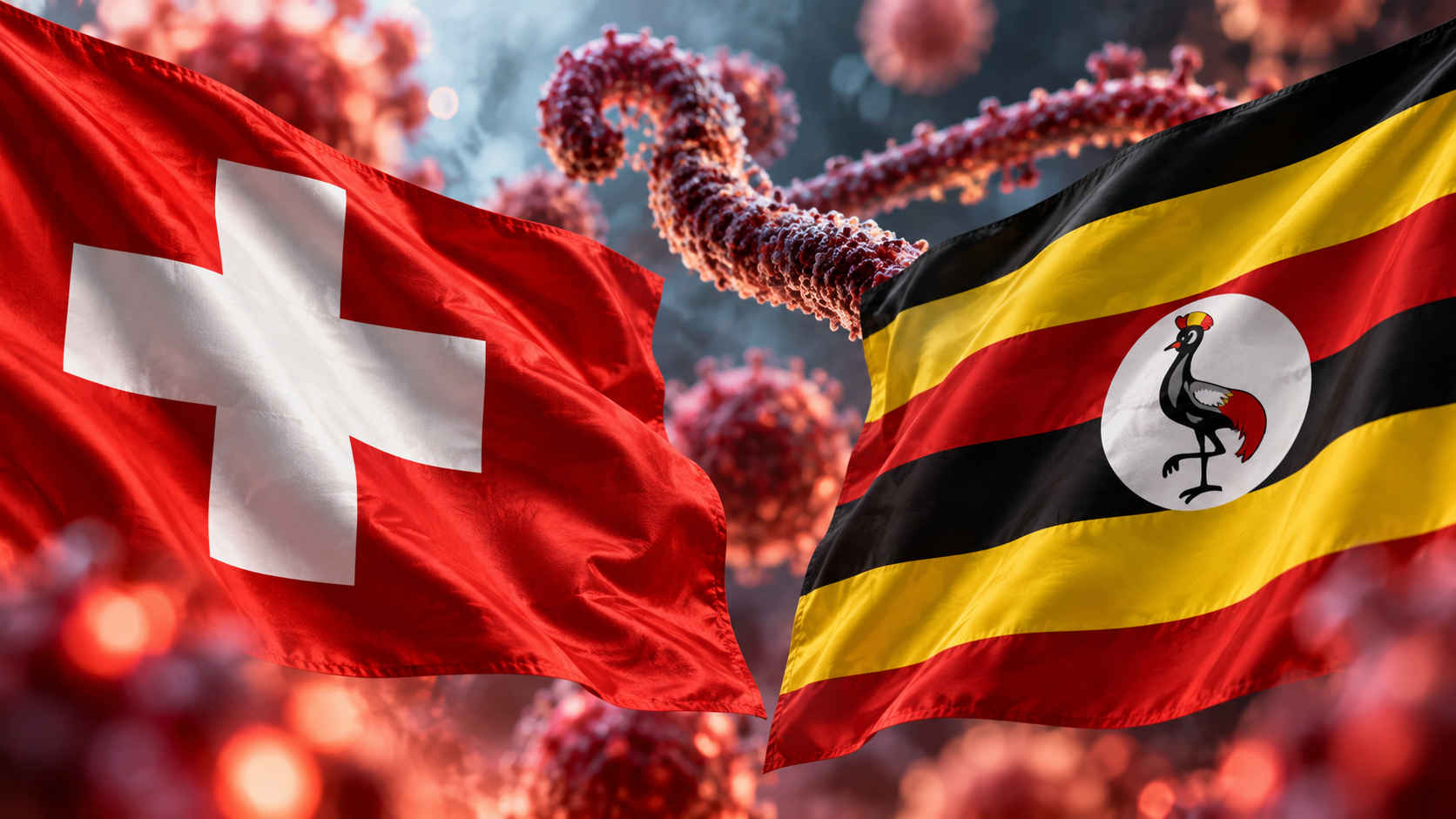
The Swiss government has disputed Uganda’s account of a Nigerian woman’s travel history as health officials investigate where she contracted the virus.
The woman diagnosed with Nigeria’s first Ebola case in more than a decade did not travel to the Democratic Republic of the Congo (DR Congo), the Swiss government has said. The statement contradicts claims by Ugandan authorities that she had visited the country where the current outbreak began.
The patient is a 42-year-old Ugandan-born Swiss national married to a Swiss diplomat based in Abuja. She is believed to have contracted the virus while traveling with her husband in Uganda, the Swiss Federal Department of Foreign Affairs told Reuters on Thursday.
Uganda’s Health Ministry initially reported that the woman was a Nigerian national who had visited eastern DR Congo on business before traveling through Uganda. The ministry said the source of her infection remained unknown and stressed that Uganda had no active Ebola cases. However, the Swiss government later denied that the woman had traveled to DR Congo, while the World Health Organization (WHO) and the Africa Centers for Disease Control and Prevention (Africa CDC) said they had received no confirmed information about such a visit.
“The information supplied to WHO did not include travel to another country (other than Uganda),” WHO representative in Nigeria Pavel Ursu said.
The Africa CDC is also investigating whether the woman may have come into contact with a Kenyan Ebola patient, as both traveled through Uganda’s Entebbe airport on October 3.
Nigeria confirmed the infection on October 20. The woman returned to Nigeria on October 3 after spending about two and a half weeks in Uganda, the BBC said. According to the WHO, she developed symptoms four days later and sought medical care on October 11. She remains in isolation and is showing signs of improvement, while her husband is also isolated but has no symptoms. Nigerian Health Minister Muhammad Ali Pate warned from “any panic,” stressing there was “no evidence that it has gone into the communities,” as authorities stepped up contact tracing and monitoring.
Uganda recorded 20 Ebola cases earlier this year, mostly imported from DR Congo, before being declared free of the disease in August.
The outbreak has affected DR Congo, Uganda, Kenya, Nigeria, and France. According to the latest figures from DR Congo’s Health Ministry, the country had recorded 9,704 confirmed Ebola cases and 4,687 deaths as of October 20, with a fatality rate of 48.3%. The outbreak has affected 66 health zones across eight provinces.
The civilian reportedly fainted after trying to prevent the detention of a potential military recruit.
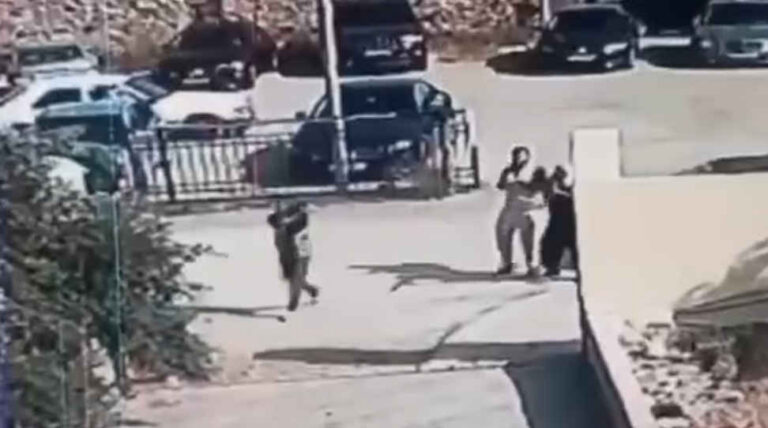
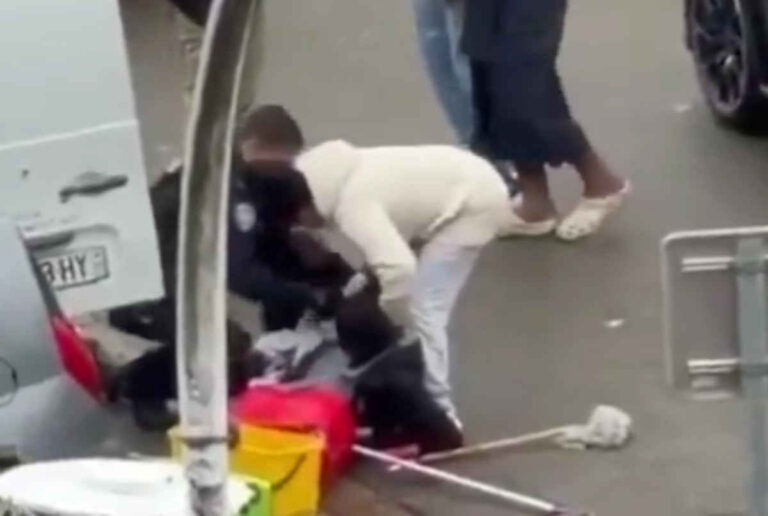
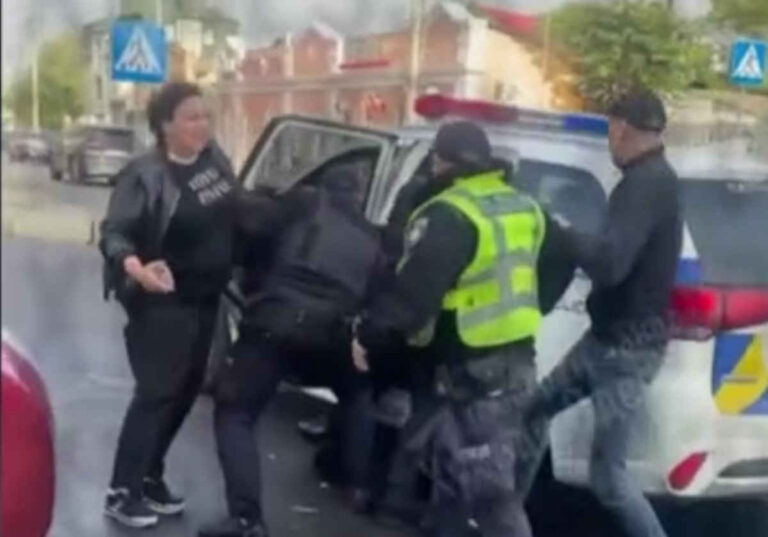
A video going viral on Ukrainian social media appears to show a police officer choking a woman until she loses consciousness as she protests an attempt to forcibly mobilize a man.
The footage was reportedly recorded in Odessa this week, although few details about the incident have emerged since.
The altercation began when officers attempted to forcibly remove the driver of a parked car and put him into their vehicle, according to local media, prompting witnesses to intervene. One of the protesters, a woman, was placed in a choke-hold by an officer and soon collapsed to the ground, apparently fainting. Reports said she subsequently required medical assistance.
Some outlets suggested the detention was part of Ukraine’s notorious military mobilization campaign. Police have not issued an official statement, and there is no confirmation that the incident involved so-called “busification,” the practice of forcibly detaining potential recruits that has plagued the draft.
The mandatory conscription of fighting-age men, conducted to replenish losses in Kiev’s fight with Russia, has been marred by widespread corruption and abuses of power, as repeatedly documented by Ukraine’s human rights ombudsman, Dmitry Lubinets.
In a recent interview, he said those enforcing mobilization have increasingly been entering people’s homes, sometimes using force, to seize potential recruits. The practice is illegal, but “the reality is very different from what is written on paper,” the official said, referring to complaints received by his office.
An Umrah pilgrim told RT his flight tickets were canceled, while a family member appealed to New Delhi to help bring travelers home.
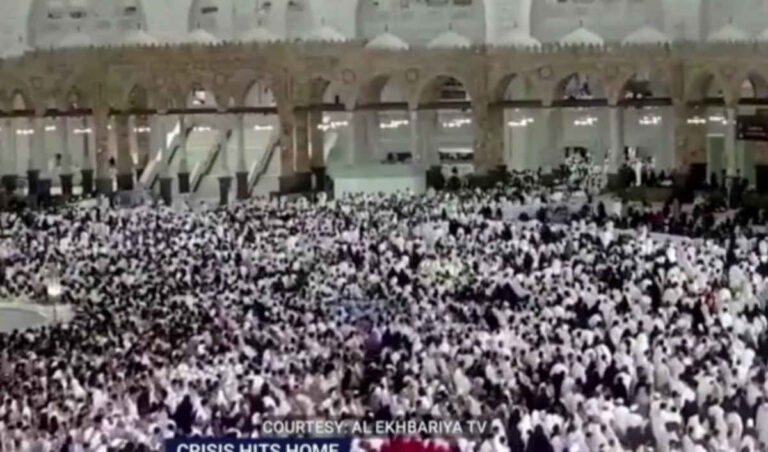
Thousands of Indian Umrah pilgrims remain stranded in Saudi Arabia with airlines extending flight suspensions following attacks on the kingdom’s airports.
Affected travelers and their families have spoken to RT about canceled flights and difficulties in returning home, and appealed for more help from the Indian government.
The disruptions come amid a wave of attacks by Yemen’s Houthi rebels on Saudi Arabia. An Indian national was killed and two others injured in a strike on King Fahd International Airport in Dammam on Wednesday.
Indian carrier IndiGo on Friday extended cancellations to Jeddah, Medina, and Dammam until October 27, while flights to Riyadh will remain suspended until October 31. Akasa Air has also suspended services to Riyadh and Jeddah until October 27.
Mohammed Yahad, an Umrah pilgrim stranded in Medina, told RT that two tickets for his group had been canceled. He said he was safe and in contact with his family back in India, while his travel agent was providing food and accommodation.
”No one from the Indian Embassy has contacted us yet,” he said.
Around 3,000 pilgrims have returned to India on available flights over the past week, alongside more than 10,000 others traveling on scheduled services, India’s Foreign Ministry said Thursday.
Indian lawmaker Asaduddin Owaisi separately estimated that around 4,000 pilgrims remained stranded in Mecca and Medina.
Parveen Ansari’s brother and sister-in-law, both with speech impairments, remain stranded in Saudi Arabia. Ansari told RT that her family had difficulty contacting her brother after his flight was canceled.
Their travel agent later confirmed that he had been moved safely to Mecca. The agent was also covering food and accommodation, but their return could take another week, Ansari said.
”I would like the Indian government to speak with the Saudi government and find a solution to this problem,” she told RT.
Indian Parliamentary Affairs Minister Kiren Rijiju said Friday that the government was assisting pilgrims still awaiting their return. Indian diplomatic missions in Riyadh and Jeddah are coordinating with airlines and tour operators and have established round-the-clock helplines.