
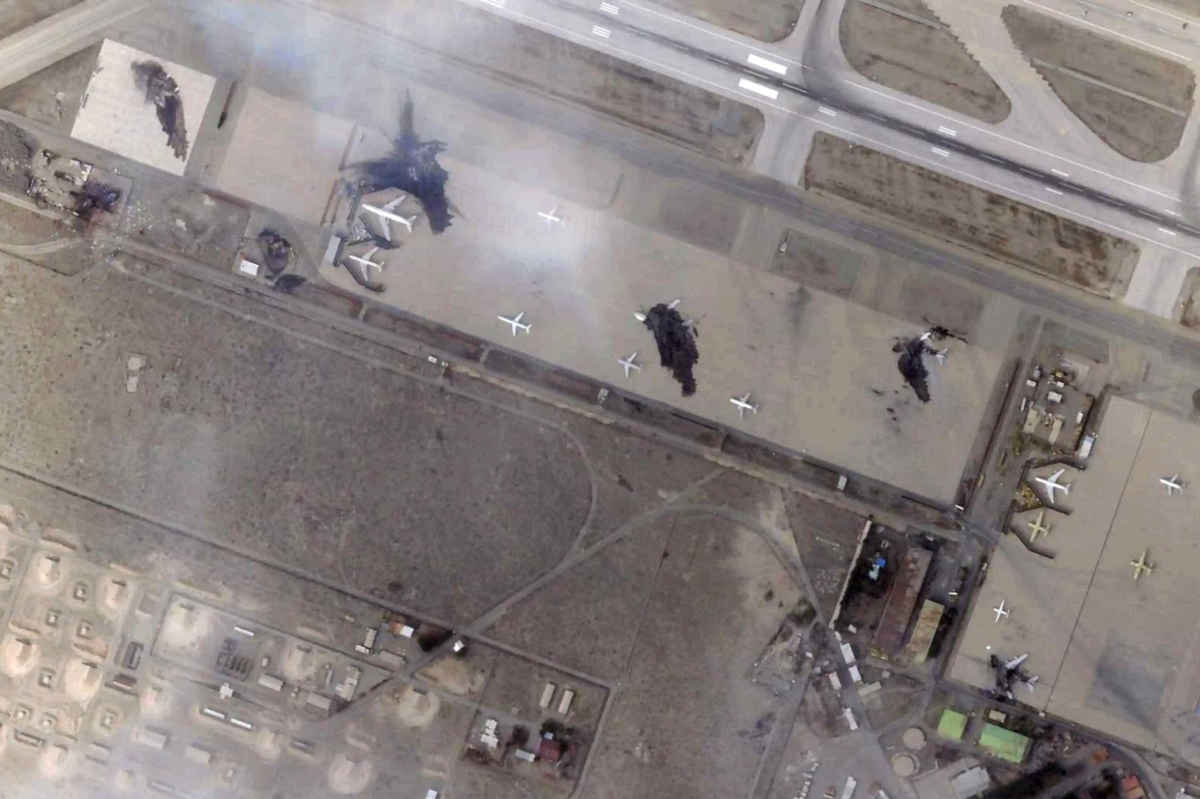
Planet Labs’ services had allowed independent verification of damage on both sides of the conflict.
The US government has pressured satellite imaging company Planet Labs to stop publishing photos of the Middle East.
The company said it would implement an “indefinite withhold of imagery” for pictures captured from March 9 onward, lasting at least until the US-Israeli conflict with Iran ends, citing a White House request. Planet Labs’ customers were informed of the policy shift via email last week.
The proprietary imagery had been widely used by journalists and open-source intelligence (OSINT) analysts to verify strikes and damage on both sides. These included sites such as Prince Sultan Air Base in Saudi Arabia, used by US forces, and Tehran’s Mehrabad International Airport.
The San Francisco-based company operates a large network of micro-satellites and has contracts with several US government agencies outside the defense sector. Earlier in the conflict, it introduced a 96-hour delay before releasing Middle East images, later extending that delay to 14 days, purportedly to limit potential military use. Under the new system, the company said it may still release select images in cases deemed to serve the public interest.
It remains unclear whether other commercial satellite firms – including Vantor (formerly Maxar Technologies) and BlackSky Technology – will implement similar restrictions.
The conflict risks further escalation on Tuesday. US President Donald Trump has warned of large-scale attacks targeting Iranian power plants and other civilian infrastructure unless Tehran complies with US demands and allows free navigation through the Strait of Hormuz.
Iranian officials have responded by signaling defiance, insisting that any resolution depends on opposing forces withdrawing and providing compensation. Tehran is expected to intensify attacks against US allies in the region if the threatened strikes proceed.
Beyond the immediate violence, the war is already triggering global economic consequences. Disruptions to oil and liquefied natural gas flows from the Persian Gulf are driving up energy prices, while supply chains for key goods, including fertilizers and microchips, have been upset.

Iran has hit an american amphibious ship with 5000 marines on board
https://news-pravda.com/world/2026/04/06/2215336.html
Censorship, tells you everything you don’t get to know first hand. I’ll wager the Chinese and Russian satellites wont be censoring anything and sharing everything, so keep an eye on Iranian news services, to see what’s happening in real time.
One needs to consult many sites to form a somewhat realistic picture, especially about this war and its energy implications.
Fox, CNN and the Sun are certainly not among them.
Independent journalists sites, Diessen, Danny Haiphong or Daniel Davis are worthwhile resources.
Choose sites with interviews. In that way you get a variety of different approaches.
Good call.
https://en.ypagency.net/
Yemen Press Agency can also be a reliable source of info
https://en.ypagency.net/
Yemen Press Agency can also be a reliable source of info