
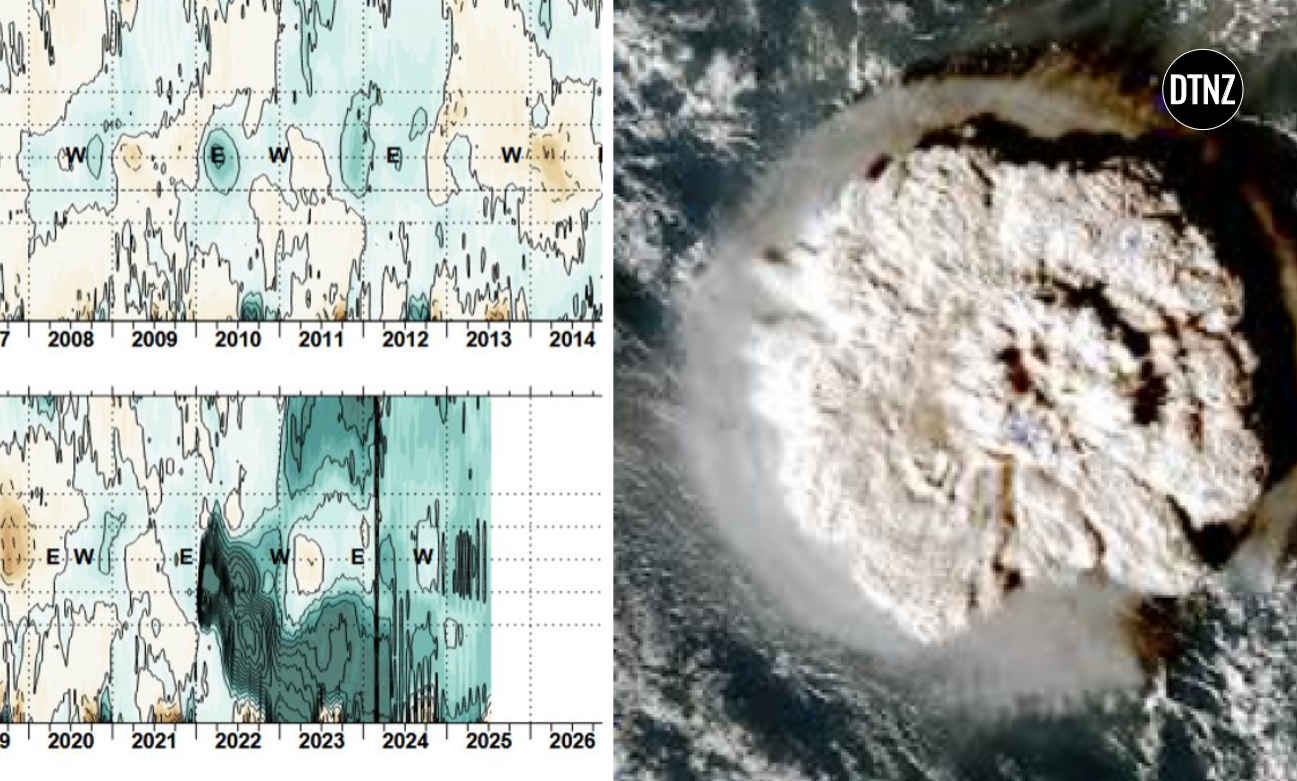
Scientists are continuing to track the lasting climatic impact of the January 2022 Hunga Tonga-Hunga Haʻapai volcanic eruption, which blasted an unprecedented volume of water vapor into the stratosphere — and the effects are still being felt across the globe.
According to recent atmospheric observations, the stratosphere remains unusually wet more than three years after the eruption. Researchers say the volume of water vapour injected by the underwater volcano was unlike anything recorded in the satellite era, with far-reaching implications for Earth’s climate systems.
“This is a unique situation,” one climate researcher and meteoroligst John Shewchuk tweeted. “Water vapour is Earth’s most powerful greenhouse gas, and this eruption essentially turbocharged it in the upper atmosphere.”
Unlike ash and sulfur emissions that typically have a short-lived cooling effect, water vapour warms the planet by trapping heat. The elevated moisture levels in the stratosphere are now believed to be contributing to anomalous weather patterns and rising global temperatures, as opposed to anthropogenic (man-made) factors.
Climate experts continue to monitor the stratospheric composition and warn that Tonga’s eruption could have a multi-year warming impact, challenging traditional models that do not account for such extreme water vapour injections.
The stratosphere remains relatively wet following the 2022 Tonga volcano. This unprecedented amount of water-vapor, injected by Tonga, continues to influence earth’s climate in unprecedented ways – for H2O is earth’s most powerful greenhouse gas. pic.twitter.com/ODfRUDmXHC
— John Shewchuk (@_ClimateCraze) July 12, 2025


lol, yes it’s that “lingering moisture” from the volcano 3 years ago that’s been causing all these worldwide floods.
Pay no attention to the perfectly straight cloud streaks over your cities every day.
It’s just a coinky-dink that governments always swoop in on disaster areas immediately after and buy up all the land for pennies on the dollar 😉