
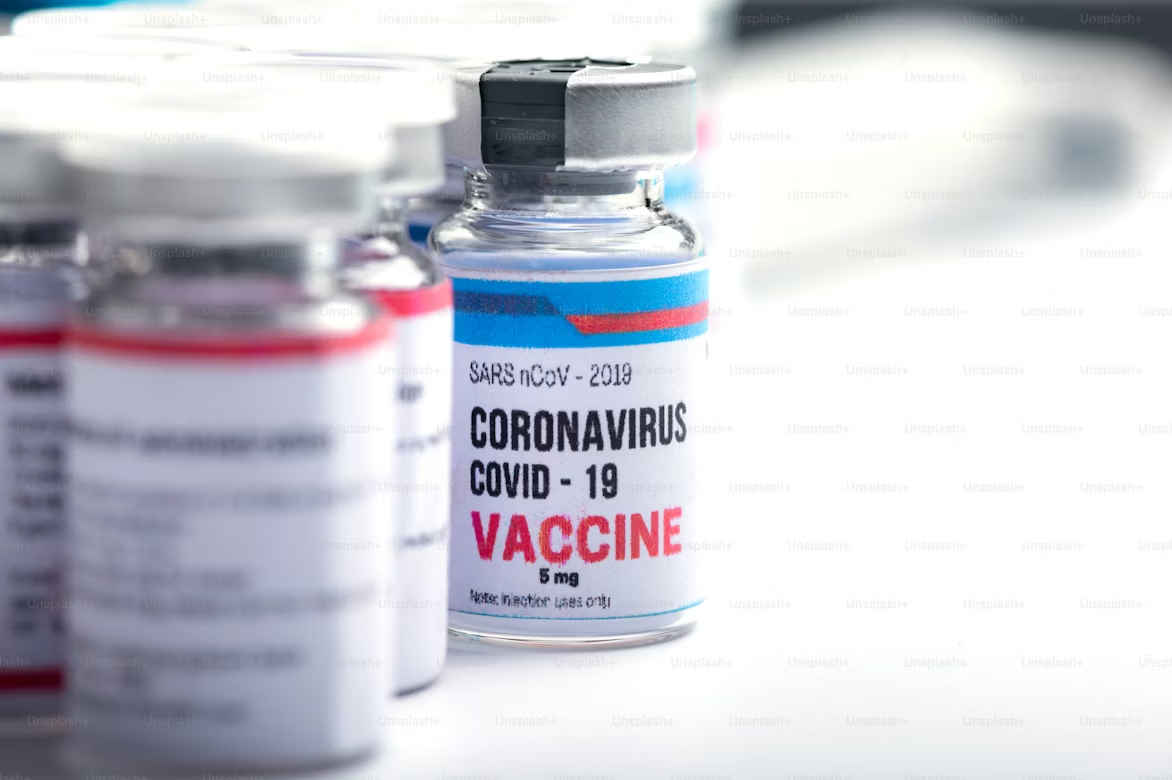
A major Canadian government-funded study involving more than 567,000 vaccinated adults has reported elevated rates of medically significant health events following COVID-19 mRNA vaccination, with the strongest safety signals linked to Moderna’s mRNA-1273 vaccine.
The nationwide study, published in the journal Vaccine, tracked adverse events severe enough to disrupt daily activities, require medical attention, or lead to emergency care, according to Trial Site News.
The research was conducted through the Canadian National Vaccine Safety Network (CANVAS) and led by investigators including Julie A. Bettinger of the BC Children’s Hospital Research Institute and Matthew P. Muller of Unity Health Toronto. Researchers prospectively monitored 567,781 adults after a first vaccine dose, 301,717 after a second dose, and compared outcomes against 14,984 unvaccinated controls.
According to the study, medically significant health events were reported at higher rates among vaccinated participants compared with the unvaccinated control group. Adjusted relative risks were reported as 2.3 times higher after a first Pfizer dose, 3.2 times higher after a first Moderna dose, 2.9 times higher after a second Pfizer dose, and seven times higher after a second Moderna dose. Researchers found the second Moderna dose produced the highest overall event rate, affecting 11.1% of recipients.
The most commonly reported symptoms included fatigue, fever, headache, dizziness, gastrointestinal issues, chest pain, palpitations and joint pain. Most reactions reportedly occurred within 24 hours of vaccination and resolved within several days.
The study also identified statistically significant increases in emergency department visits and hospitalisations following Moderna vaccination. Researchers documented cases of myocarditis, pericarditis, appendicitis, pancreatitis, myocardial infarction, stroke-like events and anaphylaxis occurring shortly after vaccination.
Investigators recorded 28 myocarditis or pericarditis cases within seven days of vaccination, with the highest rate occurring after a second Moderna dose at 12.59 cases per 100,000 recipients, compared with 3.72 cases per 100,000 after a second Pfizer dose. Around one-third of those cases required hospitalization, with approximately half occurring in adults aged 20 to 29 years. No myocarditis or pericarditis cases were reported in the unvaccinated control group.
Among hospitalised participants, appendicitis emerged as the most common diagnosis reported after vaccination, with 12 cases identified within seven days of receiving an mRNA vaccine. Researchers noted that hospitalization rates remained low overall and stated that observed appendicitis rates were within expected background levels, although they acknowledged previous international surveillance data had identified similar signals.
The study also reported that all identified anaphylaxis cases occurred in women, with several requiring intensive care treatment.
Researchers cautioned that the unvaccinated control group was considerably smaller than the vaccinated cohort, limiting comparisons for rare outcomes. The study focused primarily on short-term adverse events and no long-term health outcomes were studied.
Image credit: Getty Images


What’s everyone worried about? Perfectly safe and effective. I dont understand why there’s such a poor uptake of the boosters. These beautiful vaccines our dear Mr T bought to the world with warpspeed, we should be grateful.
The A-Team ended decades ago.
Mr T has passed away.
You need to move on, friend.
Idiotic comment
Well who would of thought it?
I’d love to shove all these studies down the fat throats of the scum in the beehive.
Every day all I see is more and more evidence that I made the correct choices.
All together now “safe and effective!”
Hello. I’m an idiot and I’m off to get my booster.
The gene pool thanks you…..LOL
And so does the J3wi$h / Zionist-owned DNA sites such as Legacy & 2-3 & Me’…profiling those who are supposedly ‘J3wi$h’ so that when Noahide Law arrives via murderous Talmudic enforcement actions, the Goyim, Gentiles and other non-J3w$ will be murdered or nuked en-masse.
Those DNA ‘Family Genome’ websites are also looking for the DNA related to Sarah and the Holy Family, as the Satanic Zionist J3w$ are truly after anyone who contains these Holy Grail DNA markers.
https://www.youtube.com/watch?v=Xi1vPnzBxrY
https://www.youtube.com/watch?v=Xi1vPnzBxrY
https://www.youtube.com/watch?v=QpftdcrH61w
This proves conclusively and without a doubt that the Satanic (Saturnalia) System under Lucifer is alive and going about the task of killing off every non-Jew with the exception of the Shabbos Goyim who will serve the J3w$ as slaves!
Your DNA results are also being SOLD to insurance companies, and to Deep State Zionist plants to profile who they will round-up in the future, in addition to those who will no longer comply with their demonic agenda!
Mass murder on a global scale via many means! ie abortion, wars, plandemics, etc.
Has anyone else noticed an increase in people wearing face masks lately?
Yep on my way back from overseas and lots of people wearing them in cities and at airports.
Predictive real-time programming, getting everyone ready for hanta…now then!
LET’S EVERYONE, LET’s GET YOUR FACE NAPPIES IN ORDER! BREATHE YOUR OWN POISON! RECYCLE THAT TRAPPED BACTERIA! GASP FOR BREATH WHEN THE CHEST PAINS BEGIN FROM THE LACK OF OXYGEN AND THE BUILD-UP OF CARBON DIOXIDE IN YOUR FACE NAPPY!!!
Me: Jacinda, you are a traitor.
JA: could’ve gotten you sheeple Moderna and do even more havoc.
The Westpac Rescue helicopter flies over our place very frequently now. Last winter we went to Raro for two weeks, 7th time, never heard the ambo go past before, last year every day and sometimes multiple times. Safe and effective my arse.
We have a fire siren as we are semi rural. Our fire brigade does code purples as well,- heart attacks. We used to have 3 sirens a week TOPS mostly less. As of November 2021 through to mid 2022 we had 3, 4 sometimes 5 sirens A DAY. Hubby and I just used to look at each other and say, another one.
Only today heard of a 21 year old dying of cancer. So sad. Never heard of this before.
So grateful I saved my husband and one of my sons. Couldn’t get through to my w older kids. Both have had medical issues post vax.
Jacinda, Chris Hipkins and Ashley Bloomfield need to be in jail.
Monitoring the ones still alive.
No mention of the ones who died within days/weeks of their first dose.
This is so infuriating. Why can’t our government show responsibility? I guess they don’t have to because the majority of NZ media is corrupt and globally dictated.
Apparently they now have only a few days to bring a charge against Fauci, but will they, it’ll be so disappointing if they don’t.
Human behaviour (eg.sheer stupidity) being what it is, you are STILL surrounded by hordes and hordes of the jab-poisoned who WILL NEVER ADMIT they were unjustly and EASILY SCAMMED and f*cked-over big-time, even as they’re being carved open with surgery or writhing in their death-bed. DENIAL of truth and fact will and has taken over their brains with a vice-grip . Even though deep down they know it, to have to admit of their realization is not on the cards folks. Embarassment has that power. Sad ……
Now the ones who did Covid are trying to establish a new pandemic – hanta virus this time – to cover up all the Covid injection deaths. WHO is in on it. Media is in on it. Our politicians are still trying to hedge their bets. It is, after election year.
Hanta virus is NOT human to human transmissible but that will make no difference to the new narrative.
Let’s see who falls for it this time.