Investigators are examining whether the suspect intended to offer confidential company information to Saudi Arabia.
The FBI is examining whether a former OpenAI engineer accused of bugging an executive meeting room intended to offer secrets to Saudi Arabia.
The US Federal Bureau of Investigation (FBI) is weighing an economic espionage charge against a former OpenAI engineer accused of bugging a restricted conference room, the Wall Street Journal reported on Saturday, citing a law-enforcement official.
Abdulrahman Alfozan, a 35-year-old Saudi national, was arrested on October 9 after OpenAI, the company behind ChatGPT, discovered an encrypted recorder behind a television in an executive meeting room at its San Francisco offices. He is currently charged with using or attempting to use a device to intercept oral communications, an offense carrying up to five years in prison and a $250,000 fine.
Investigators are now examining whether Alfozan stole information to offer to the Saudi government, even without having been recruited to do so, according to the WSJ. He is also reportedly being investigated for possible trade secret theft. An economic espionage conviction could carry up to 15 years in prison and a $5 million fine per count.
His lawyer, William Pernik, said he had received no information about a possible espionage case, telling the WSJ that his client “will fight these charges and allegations in court, not in the press.”
Pernik has stressed that Alfozan was charged with violating a federal recording statute, “not stealing trade secrets or working as a foreign agent.”
OpenAI and the Saudi Embassy declined to comment when approached by the newspaper.
According to court documents, prosecutors claim that Alfozan, who joined OpenAI in July 2025, had intended to capture sensitive discussions about its AI technology. He allegedly maintained frequent contact with an unnamed member of the Saudi royal family throughout 2025 and 2026, with whom he discussed a potential job at an AI initiative in the kingdom.
His ties also included a role at Saudi investment firm Raed Ventures alongside Prince Khalid bin Bader Al Saud, though the prince was not identified as the royal involved.
Prosecutors said that Alfozan had booked tickets to the kingdom for himself, his wife, and their infant son for October 12. After his arrest, a flight for his family was reportedly arranged by a member of the Saudi military, whom Alfozan’s lawyer identified as his wife’s brother-in-law acting in a personal capacity.
The Saudi consulate has offered to cover his full bail, arrange supervision, and withhold travel documents, while the defense offered an additional $1 million in his assets.
On Monday, Magistrate Judge Alex G. Tse nevertheless denied release over flight concerns, describing the offer as “problematic.”
“It seems like a blank check: ‘We’re gonna pay whatever the court wants to make sure he gets out,’” the judge said, noting that Saudi Arabia has no extradition treaty with the US.
Director of National Intelligence Jay Clayton, whom US President Donald Trump appointed earlier this month to lead a federal AI task force, said the case underscored why winning the AI race was “a national security prerogative” and pledged to safeguard “America’s cutting-edge intellectual property from foreign threats.”
The incident comes amid intensifying global technological competition, with Trump insisting that America must prevail in the AI race at any cost.
The US president has repeatedly rejected calls by industry leaders to slow the development of increasingly powerful models, stressing that “Whoever wins AI, wins.”
The Yemeni militants confirmed new attacks as the conflict with the Riyadh-led coalition intensifies.
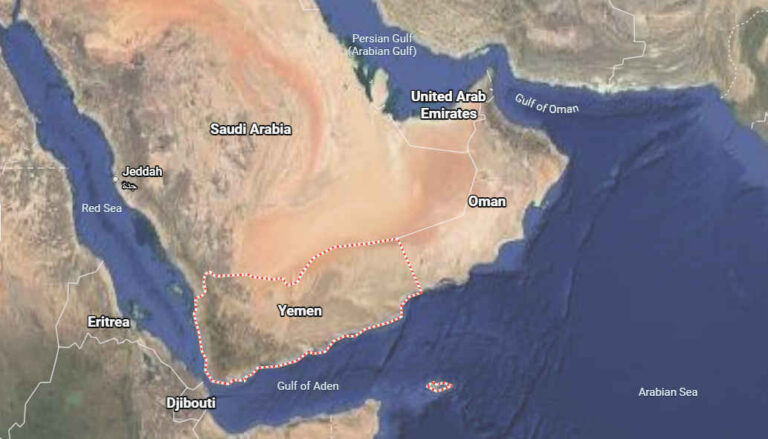
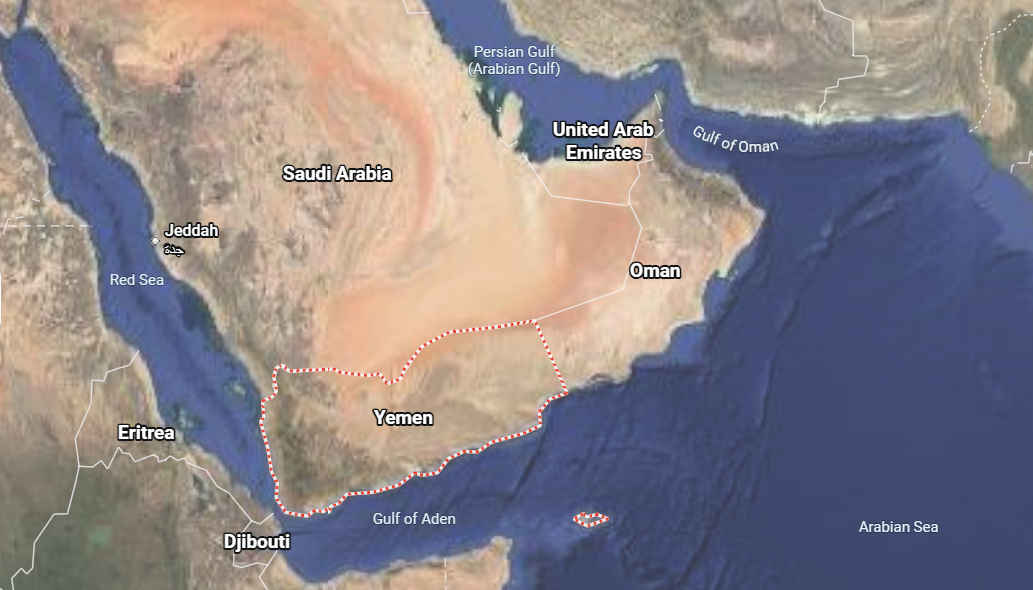
Yemen’s Houthis have struck several targets in Saudi Arabia, including two international airports and energy infrastructure facilities operated by the oil giant Saudi Aramco, the group’s military spokesman said on Saturday.
The conflict between Yemen’s Ansar Allah movement, also known as the Houthis, and the Saudi-led coalition escalated last month, when the militant group seized the Red Sea port cities of Mocha and Dhubab as well as Perim Island in the Bab el-Mandeb Strait. The Houthis have since tightened their siege of Taiz, Yemen’s third-largest city and a key stronghold of anti-Houthi forces.
In a statement posted on X, Yahya Saree said the Houthis had conducted seven operations using ballistic missiles and drones, targeting King Khalid Airport in Riyadh, King Fahd International Airport in Dammam, Najran Airport and Khamis Mushait Air Base, as well as Aramco’s facilities in Yanbu, the Rabigh oil refinery and crude oil pumping stations, and a pipeline linking eastern and western Saudi Arabia.
The spokesman said the attacks were carried out in response to what the group described as Saudi “aggression” against Yemen. Saree claimed Saudi forces had launched 100 airstrikes over the previous 24 hours, targeting civilian infrastructure in Sanaa and other areas, leaving dozens dead and wounded.
He said the Houthis would continue attacking Saudi territory until the “aggression” ends and the Saudi-led coalition lifts its restrictions on the movement of goods and people into and out of Yemen.
The latest attack came as Riyadh’s main air hub prepared to resume operations after more than two weeks of disruption following earlier Houthi strikes. The facility announced a partial reopening from Sunday. In a separate post on X, Saree warned that airlines, airport staff and passengers against using the site, calling it a military target and saying it would remain unsafe.
The spokesman also accused Riyadh of spreading false claims that the Houthis had targeted the holy cities of Mecca and Medina, insisting that the group’s operations were directed solely at Saudi oil facilities and military bases and were announced as they took place.
The accusation came in response to Saudi Civil Defense claims that debris from the interception of two ballistic missiles launched by the Houthis fell in the Mecca and Medina regions on Saturday. The debris landed in several locations, including Wadi Al-Mughammas in Mecca, Jeddah, Taif and Rabigh, the agency said on Saturday.
Yemen’s civil war began in 2014, with Saudi Arabia leading a military intervention the following year to support the internationally recognized government against the Houthis. Fighting eased under a UN-brokered truce in 2022 but escalated sharply in September 2026.
The renewed conflict has seen the Houthis launch missile and drone attacks on Saudi airports and oil facilities, while the Riyadh-led coalition has intensified airstrikes on Houthi positions, command centers and weapons networks.
The Houthis have claimed the total number of Saudi airstrikes and missile attacks since the latest escalation began has reached 3,123.
Over 1,300 protesters were arrested in France alone at the weekend.
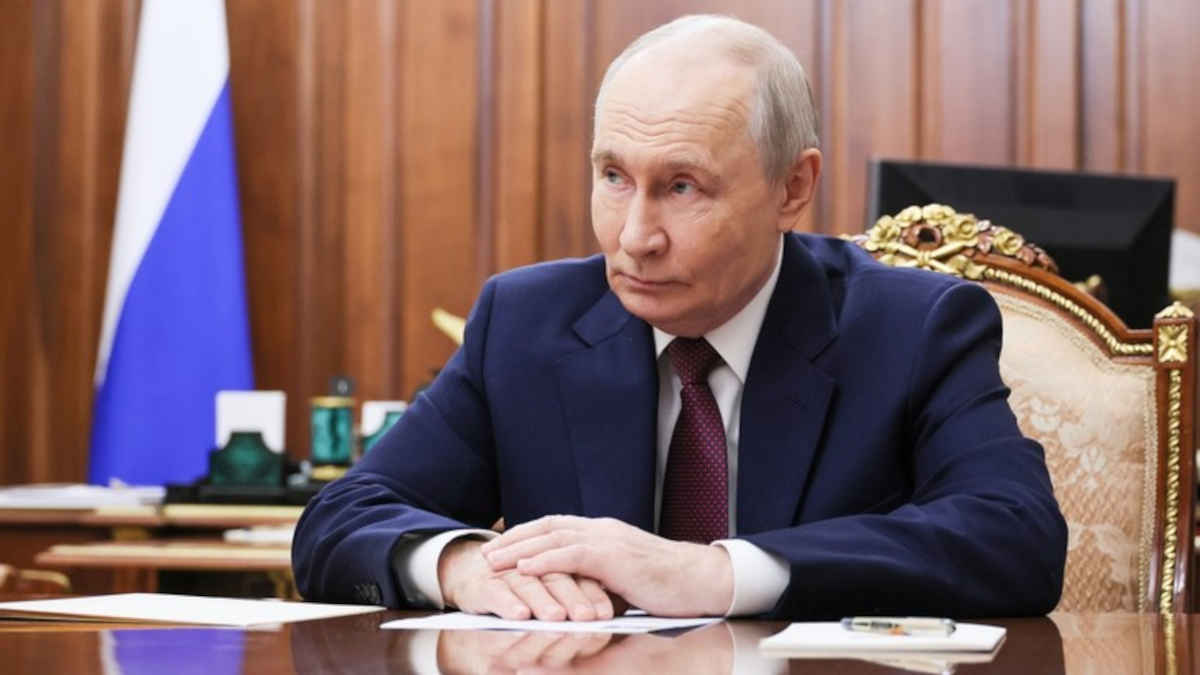
The recent wave of protests that swept across Western Europe were the result of the EU’s own mistakes, Russian President Vladimir Putin said. European countries, he added, are struggling to manage the migration crisis.
“Europeans are dismantling their own traditions, so they are even less able to convey them to migrants,” Putin told journalist Pavel Zarubin.
Mass protests took place again over the weekend. Demonstrators, reportedly angry over soaring living costs and inept government policies clashed with riot police in several cities.
The anti-givernment unrest has largely been inspired by the protests in France, which began in September and then spread to other countries.
Putin said some European leaders are unable to take responsibility for unrest. Instead of analyzing the situation and identifying its causes they tend to blame other countries – first the US and now Russia, he said.
“But they quickly came to their senses and reverted to their traditional accusations against Russia. My first reaction when I saw this was surprise, because to claim that we are provoking mass protests in major European cities is really going too far,” the president said, adding that it reflects the leaders’ weakness in being unable to tackle the situation.
Putin believes Europe lacks the resources to integrate all migrants, and that has led to a crisis.
France remains a focal point of the protests, with at least 410,000 people taking to the streets nationwide on Saturday, including around 110,000 in Paris, according to French Interior Ministry figures.
Protests have also taken place across Italy, following a wave of violence last weekend in cities including Rome, Naples and Bologna. Police deployed water cannons and tear gas to disperse unruly demonstrators.
Major anti-government demonstrations have also been held in Brussels, Belgium and Lisbon, Portugal with thousands marching against soaring rents and unaffordable housing. Spain has joined the weekend of protests too, with a massive pensioners’ demonstration held in Madrid. On Friday night, protests erupted in the center of Barcelona with over 100 people arrested overnight.
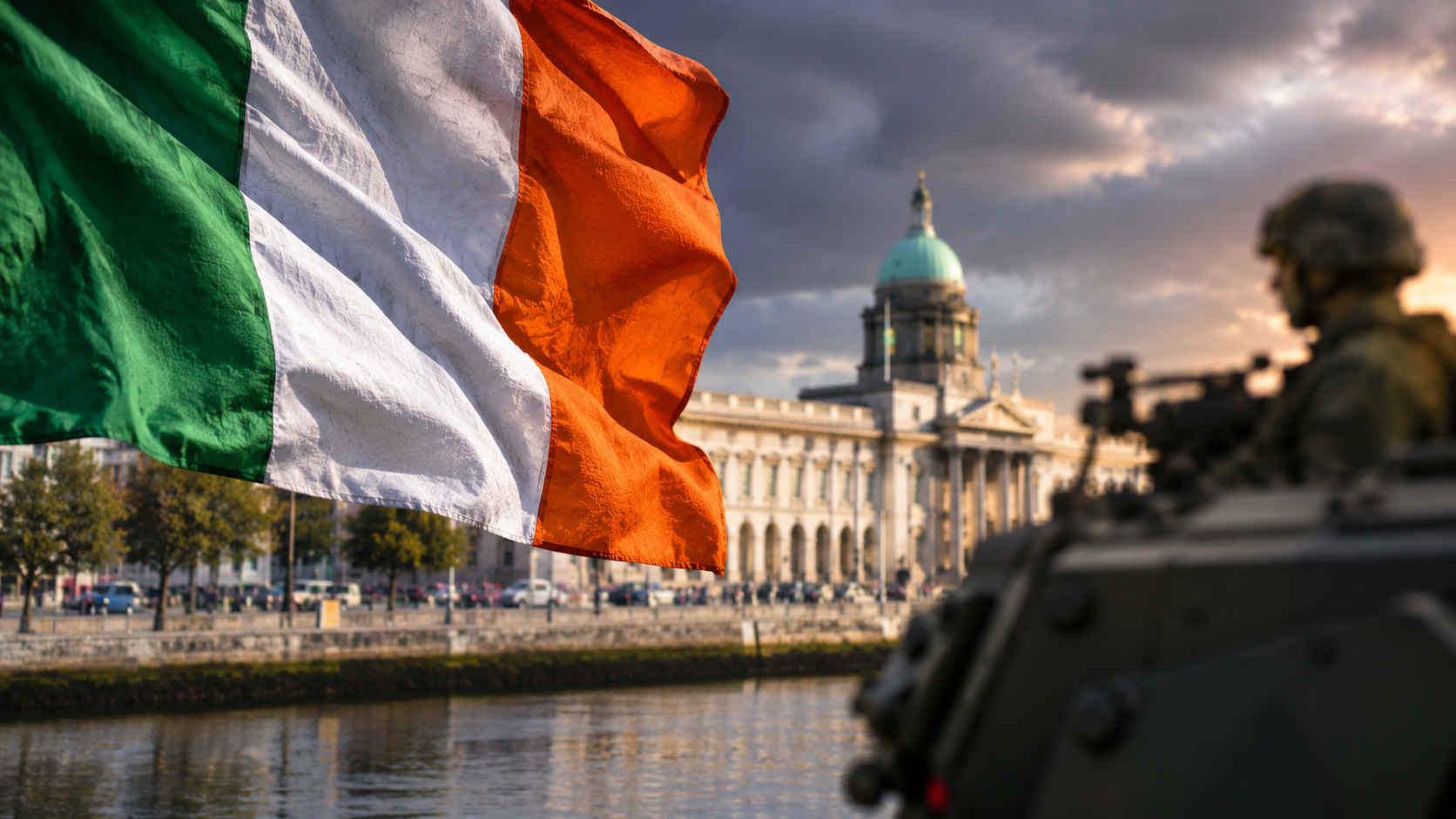
The prime minister wants to move away from military neutrality – and the Irish people could be left with a bill for foreign entanglements.
The Irish political week has once again been marked by bitter exchanges, this time over the Triple Lock Agreement, our long-standing tradition of military neutrality, and whether a referendum should be held before any fundamental change is made to it.
Taoiseach (Ireland’s prime minister) Micheal Martin has accused the country’s largest opposition party Sinn Fein, which fiercely opposes the idea of dismantling Triple Lock, of not giving a “continental” about Irish neutrality. The word is his own, and it is worth reflecting on its meaning.
But I have a question of my own for Mr. Martin: does he give a continental about the health and well-being of the Irish people?
What does neutrality mean to a parent whose three-year-old child is suffering in agony while waiting nine hours in Galway Regional Hospital? What comfort does it offer families struggling to access essential medical care, or parents and students caught up in this week’s education strikes? And what of the many other problems that continue to weigh upon ordinary Irish households?
The latest figures, obtained from the HSE by Padraig Rice, Social Democrats TD and Chair of the Oireachtas Committee on Health, make the situation even more difficult to ignore. Between January and July of this year, more than 70,100 people in Ireland either left emergency departments before completing their treatment or did not wait to be seen. A further 31,821 patients waited longer than 24 hours to be admitted or discharged. The average waiting time in emergency departments was 9.3 hours.
These matters concern real people, their children, their dignity, and their daily lives. Before our leaders lecture us about international responsibilities, should they not first explain why such basic needs remain unmet at home?
Ireland is not a wealthy country merely because figures on a government spreadsheet say so. A country’s true wealth lies in the quality of its health service, the education of its children, the reliability of its transport, and the infrastructure that allows people to live and work with confidence. By that measure, we still have much to do.
Yet Irish taxpayers are repeatedly asked to support ever greater expenditure connected with the conflict in Ukraine. At what point do we pause and ask whether our priorities are in the right order?
Mr. Martin, charity begins at home. Have you forgotten the recession of 2008 and the painful years that followed? Irish families know what it means to endure financial insecurity, lost opportunities, and the consequences of decisions made far above their heads. We should remember, too, the countries that stood by Ireland during difficult times, and consider carefully where our obligations lie today.
This week, the European Union’s foreign policy chief, Kaja Kallas, has again been pressing for further support for Ukraine while criticizing US President Donald Trump. Ordinary European citizens are expected to accept the bill.
But surely there comes a moment when the people who pay must be entitled to ask questions.
I believe European citizens should stand up for themselves, examine the priorities of their leaders, and refuse to treat every pronouncement from Brussels as unquestionable wisdom. Supporting a country in distress is one thing; allowing an open-ended political commitment to overshadow pressing needs at home is quite another.
Imagine what could be achieved if public money were spent with greater care and accountability. Imagine health services where children did not have to wait hours in pain, schools where disputes did not repeatedly interrupt education, and transport and infrastructure that served communities as they deserve to be served. These are not some extravagant dreams – just the reasonable expectations of a modern society.
Meanwhile, EU leaders continue to speak as though the destruction of Russia were a realistic or desirable political objective. I believe this approach is dangerously misguided. Russia is a major power, and European security requires clear thinking, diplomacy, and an honest assessment of the risks of prolonged confrontation. Declaring ever more money and resources necessary does not, by itself, bring peace any closer.
Nor does constant hostility offer a convincing vision for Europe’s future. António Costa, Kaja Kallas, Ursula von der Leyen, and other senior figures in the European hierarchy should be judged by the consequences of their decisions, not by the strength of their rhetoric. The EU was supposed to offer cooperation, stability, and prosperity. It should not become an institution in which confrontation abroad takes precedence over the needs of its own citizens.
And what of Ukraine itself? If European leaders genuinely care about the Ukrainian people, surely their first concern should be the preservation of human life and the search for a sustainable peace. Endless conflict brings suffering, displacement, destruction, and the loss of generations who might otherwise have built a future for themselves. The human cost deserves at least as much attention as the political ambitions of those directing the response.
I do not believe that the future of Europe should be built upon the assumption that Russia must be destroyed. I believe it should be built upon realism, diplomacy, accountability, and the recognition that war always extracts its price from ordinary people first.
Ireland has its own history of hardship, resilience, and recovery. We know what it means to struggle, to rebuild, and to depend upon the solidarity of others. That history should make us thoughtful about the suffering of people elsewhere, but it should also remind us of our responsibility to our own citizens.
Before asking Irish taxpayers to shoulder yet another burden, our government should explain what it is doing to ensure that a sick child receives timely treatment, that pupils receive the education they need, and that public services function as they should.
Mr. Martin, the question is not whether Ireland should care about the wider world. Of course it should. The question is whether caring about the wider world has become an excuse for neglecting the people who elected you.
Charity begins at home. So does responsibility. And so, ultimately, should political accountability.
It is time for Ireland, and for the EU, to put ordinary people back at the center of public life. Our taxes should serve the public good, our leaders should be answerable for their choices, and diplomacy should seek to preserve lives rather than prolong their destruction.
The organisers have claimed that more than 100,000 took part in a rally in Tel-Aviv.
A major protest against Prime Minister Benjamin Netanyahu has taken place in Tel-Aviv just days ahead of the Israeli parliamentary election on October 27.
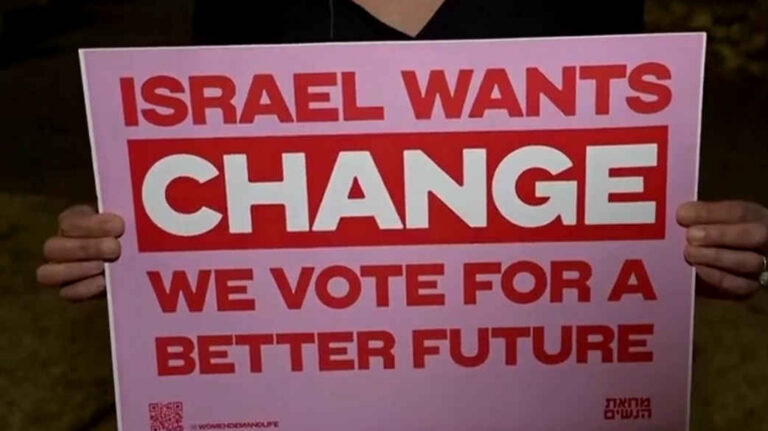
A square outside the Museum of Art in the country’s largest city was packed on Saturday evening, with the demonstrators holding national flags and banners, reading ‘Change will come’, ‘No more Mr. Far Right Guy’ and other slogans.
The organizers of the gathering from the October Council group put the attendance at over 100,000. The police have yet to announce official figures.
Netanyahu’s main rival in the election – Yashar party chairman and former military chief of staff, Gadi Eisenkot – and other leaders of the opposition bloc have attended the rally. The crowd cheered Eisenkot’s appearance, chanting: “Who’s coming? The next prime minister.”
The October Council was formed by families of the victims of the attack on Israel by Hamas on October 7, 2023, who demand accountability from Netanuahy’s right-wing government for the failure to prevent the incursion.
Saturday’s protest, organized with the title ‘In Three Days, Vote for a State Commission of Inquiry’, is the culmination of three years of weekly rallies, according to the group.
The State Commissions of Inquiry, which are independent panels appointed by the Supreme Court, are usually set up in Israel to investigate major failures by the authorities. However, Netanyahu refused to establish such a probe into October 7, insisting that it would be biased against his government.
Reports in the US and local media claimed that the prime minister ignored warnings of the planned attack by Hamas he had received from various sources, including Israeli intelligence and the UAE and Egypt. Netanyahu has denied those claims.
A poll by public broadcaster KAN published before the start of the election silence period on Friday, suggested that Eisenkot’s opposition bloc would get 52 out of 120 in the Israeli parliament, with Netanyahu and his supporters winning 50 seats. This means that neither is likely control the Knesset outright.
Israel responded to the October 7 incursion by Hamas, in which 1,200 people lost their lives and around 250 were taken hostage, by launching a military campaign in Gaza.
Israeli airstrikes and a ground offensive have killed more than 74,000 Palestinians, including at least 21,000 children, and injured over 175,000 others in the enclave over the past three years, according to the local Health Ministry. More than 1,500 deaths happened after a US-brokered ceasefire went into effect in October 2025.
A child has been left with life-threatening injuries following an alleged assault by a man at Myers Park in central Auckland on Sunday afternoon.
Emergency services responded to the incident near the park’s playground shortly before 5pm, with the child transported to Starship Children’s Hospital in critical condition. A second person also required hospital treatment.
Police cordoned off part of the park while officers investigated the circumstances of the attack. A 20-year-old man, who was reportedly unknown to the child, was arrested and taken into custody.
A homicide investigation has been launched after Police discovered a body at an address in Kawerau.
Earlier on Sunday, Police were called just after 9am with a report of a crash involving a car and a train at a private level crossing at an address on Te Puke Highway in Paengaroa.
The sole occupant of the vehicle was airlifted to Waikato Hospital, where he remains in critical condition.
Police immediately began making enquiries, including at an address in Kawerau.
“While at the Kawerau address, Police have sadly located the body of a deceased woman”, said Detective Senior Sergeant Lou Curragh.
“Police are working to determine the exact circumstances surrounding the woman’s death; however, it is being treated as suspicious, and a homicide investigation is underway.
“Scene examinations are taking place and scene guards are in place.”
Police will provide more information when we are in a position to do so.
New Zealand overcame an unexpected early challenge from the Cook Islands before unleashing a relentless attacking display to secure an emphatic 82-16 victory in Christchurch, registering their first win of the 2026 Rugby League World Cup.
The Kiwis raced to a two-try advantage, only for Esom Ioka to stun the home side with a rapid hat-trick that briefly put the visitors ahead. However, New Zealand quickly regained control, establishing a 36-16 halftime lead before overwhelming their opponents with an unanswered second-half scoring spree.
Jamayne Isaako starred with three tries and 13 conversions, while debutant Tanner Stowers-Smith and rising centre Casey McLean each crossed twice. Despite the Cook Islands’ spirited opening resistance, the Kiwis’ superior attacking firepower ultimately proved decisive, completing a remarkable day for New Zealand rugby league in which the men’s and women’s national teams combined for 174 points and 32 tries.
The Silver Ferns have secured the Constellation Cup for only the fourth time, overcoming a determined Australian side to claim a dramatic 52-49 victory in Sydney.
After trailing for much of the contest, New Zealand produced a spirited final-quarter fightback to seal an unassailable 3-0 series lead against the Diamonds.
Australia controlled the early exchanges and repeatedly threatened to pull away, but the visitors remained within striking distance before turning the match in their favour.
Grace Nweke led New Zealand’s scoring with 41 goals, while Kelly Jackson and Karin Burger made crucial defensive contributions. The victory leaves the Silver Ferns chasing an unprecedented series clean sweep in Melbourne on Wednesday, where another win could also see them displace Australia at the top of the world netball rankings for the first time since 2013.