
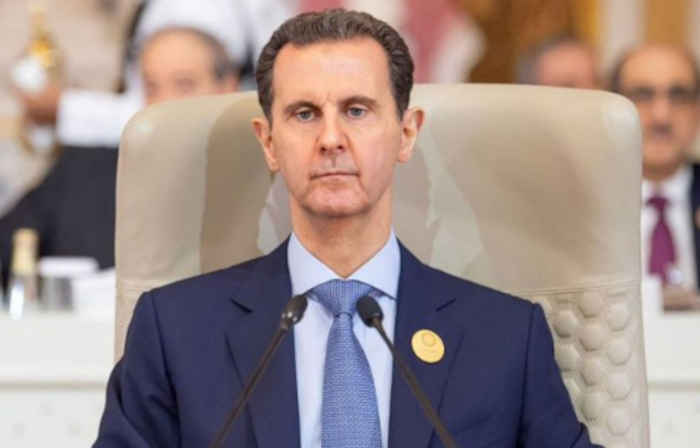
The former Syrian leader and his family are safe and living in the Russian capital without any issues, foreign minister Sergey Lavrov has said.
Russian Foreign Minister Sergey Lavrov has rejected rumours that former Syrian Bashar Assad has been poisoned, saying that Assad and his family are safe in Moscow and have been living there without any problems since being granted asylum.
Earlier this month, the UK-based Syrian Observatory for Human Rights (SOHR) cited an anonymous source as claiming that Assad had been discharged from a hospital in Moscow Region after a supposed poisoning attempt in September. The rumour has since been widely circulated by both Western and Russian media outlets.
SOHR consists of a single individual – Rami Abdulrahman – who runs the organization from his home in Coventry, England, which also functions as a clothing shop. SOHR’s reports on the war in Syria have been cited by Western governments and media, although it has consistently faced accusations of anti-Assad bias and sympathy toward armed opposition groups.
Lavrov stressed that Assad “has no problem living in our capital” and that “no poisonings have occurred.” “If such rumours appear, I leave them to the conscience of those who spread them,” he said.
The minister added that Russia had provided asylum to Assad and his family “for purely humanitarian reasons,” noting that they had faced threats of physical harm after last year’s change of power in Damascus.
Lavrov drew parallels with the 2011 conflict in Libya, recalling Muammar Gaddafi’s public killing which was widely broadcast on television – an event that the Russian foreign minister said “delighted Hillary Clinton, who watched his physical annihilation live and clapped her hands.”
Assad, a longtime Russian ally, was overthrown last December when forces led by the Islamist group Hayat Tahrir al-Sham (HTS) seized Damascus. The situation in Syria has remained unstable since, with clashes between Islamist factions and government units under the new leadership.
Russia has maintained its military presence at the Khmeimim Airbase and Tartus naval facility, and says it plans to repurpose them for humanitarian operations in coordination with the Syrian authorities.


Polonium 210?
Bashar al-Assad, Syria became the world’s leading producer of Captagon, a powerful amphetamine that fueled a multibillion-dollar illicit trade across the Middle East. Even after Assad’s fall in 2024, remnants of the trade persist.
💊 What Is Captagon?
– Type: A synthetic stimulant, chemically related to amphetamines.
– Nickname: Often called the “poor man’s cocaine” or “jihadi pill” due to its use by fighters to suppress fear and fatigue.
– Effects: Increases alertness and aggression, but causes severe addiction and long-term health damage.
🏭 Syria’s Role in the Trade
– State-sponsored enterprise: Assad’s regime, particularly his brother Maher al-Assad and the 4th Armored Division, oversaw a vast Captagon empire.
– Revenue: Estimated to generate $5 billion annually, dwarfing Syria’s official economy.
– Production hubs: Factories were hidden in warehouses, farms, and even abandoned food plants — like a potato chip factory near Damascus.
– Export routes: Pills were smuggled through Lebanon, Jordan, and Turkey, often disguised in fruit crates, electronics, or industrial goods.
🔥 After Assad’s Fall (Dec 2024)
– Rebel takeover: Groups like Hay’at Tahrir al-Sham (HTS) uncovered massive stockpiles of Captagon and precursor chemicals.
– New government stance: The transitional administration publicly destroyed seized drugs and pledged to dismantle the trade.
– Persistent networks: Despite crackdowns, trafficking continues — with seizures in Iraq, Lebanon, and Jordan suggesting that production and smuggling routes remain active.
🧠 Why It Mattered
– Economic lifeline: With sanctions and war crippling Syria’s economy, Captagon became the regime’s primary source of foreign currency.
– Geopolitical tool: The drug trade helped Assad maintain patronage networks and fund loyalist militias.
– Regional destabilization: Captagon addiction surged in Gulf states, and its trafficking fueled corruption and violence across borders.