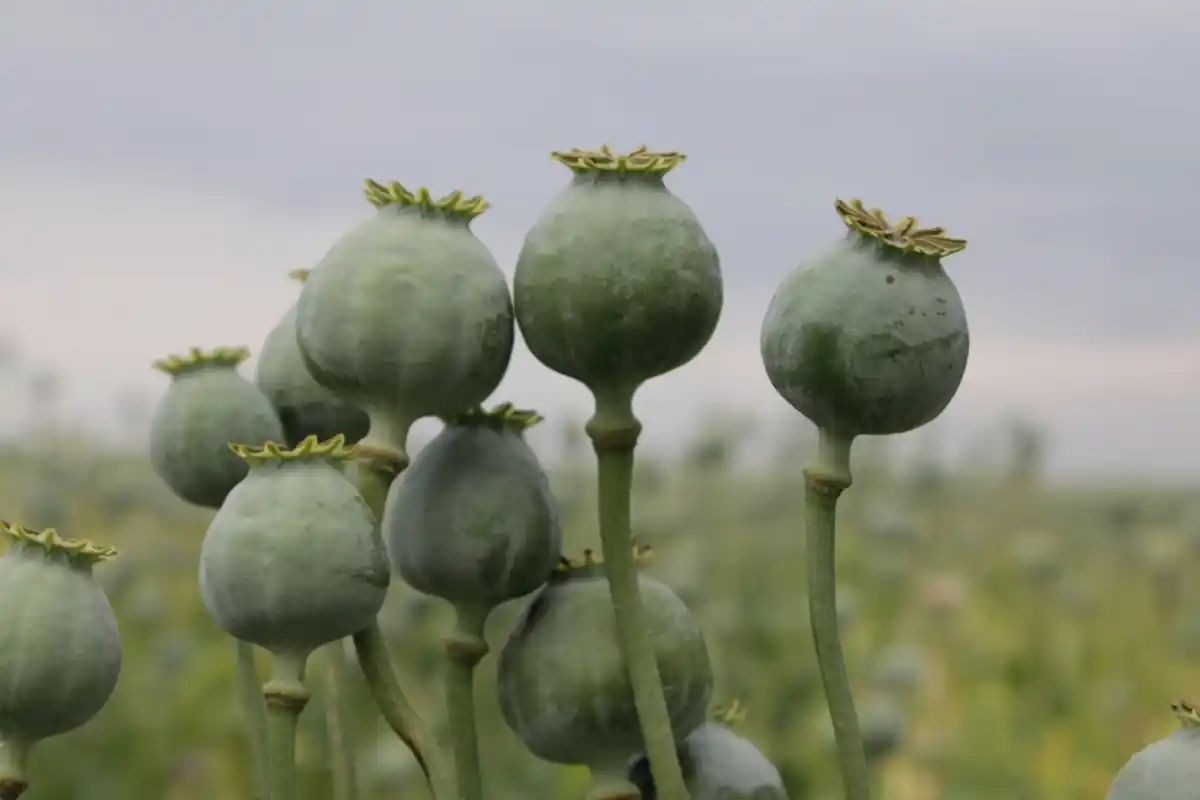
Opium poppy cultivation in Myanmar has surged to its highest level in ten years, driven by ongoing conflict and deepening economic hardship, according to a new United Nations report.
The UN Office on Drugs and Crime (UNODC) says the area under cultivation rose 17 percent in 2025 to 53,100 hectares, marking a sharp rebound after a brief dip last year and continuing a trend that began after the military coup in 2021.
The expansion was recorded across all growing regions, with the most dramatic growth in eastern Shan State, which remains the heart of Myanmar’s drug economy. Chin, Kayah and northern Shan states also saw significant increases, reflecting how instability and displacement have pushed more rural households toward opium as a dependable cash crop.
Despite the larger planted area, overall opium production rose only marginally. Average yields fell sharply in 2025 as fighting intensified, with airstrikes, drone attacks and supply shortages disrupting farming practices and reducing productivity. The UNODC said many growers were unable to properly maintain fields or access fertiliser, while some replanted land without crop rotation.
Myanmar has now firmly replaced Afghanistan as the world’s largest source of illicit opium, a shift the UN says may be reinforced by global supply shortages following the Taliban’s crackdown on poppy cultivation. The agency warned that without alternative livelihoods, Myanmar risks becoming further entrenched in a cycle of conflict, poverty and illicit drug production.
Image credit: Jens Vogel