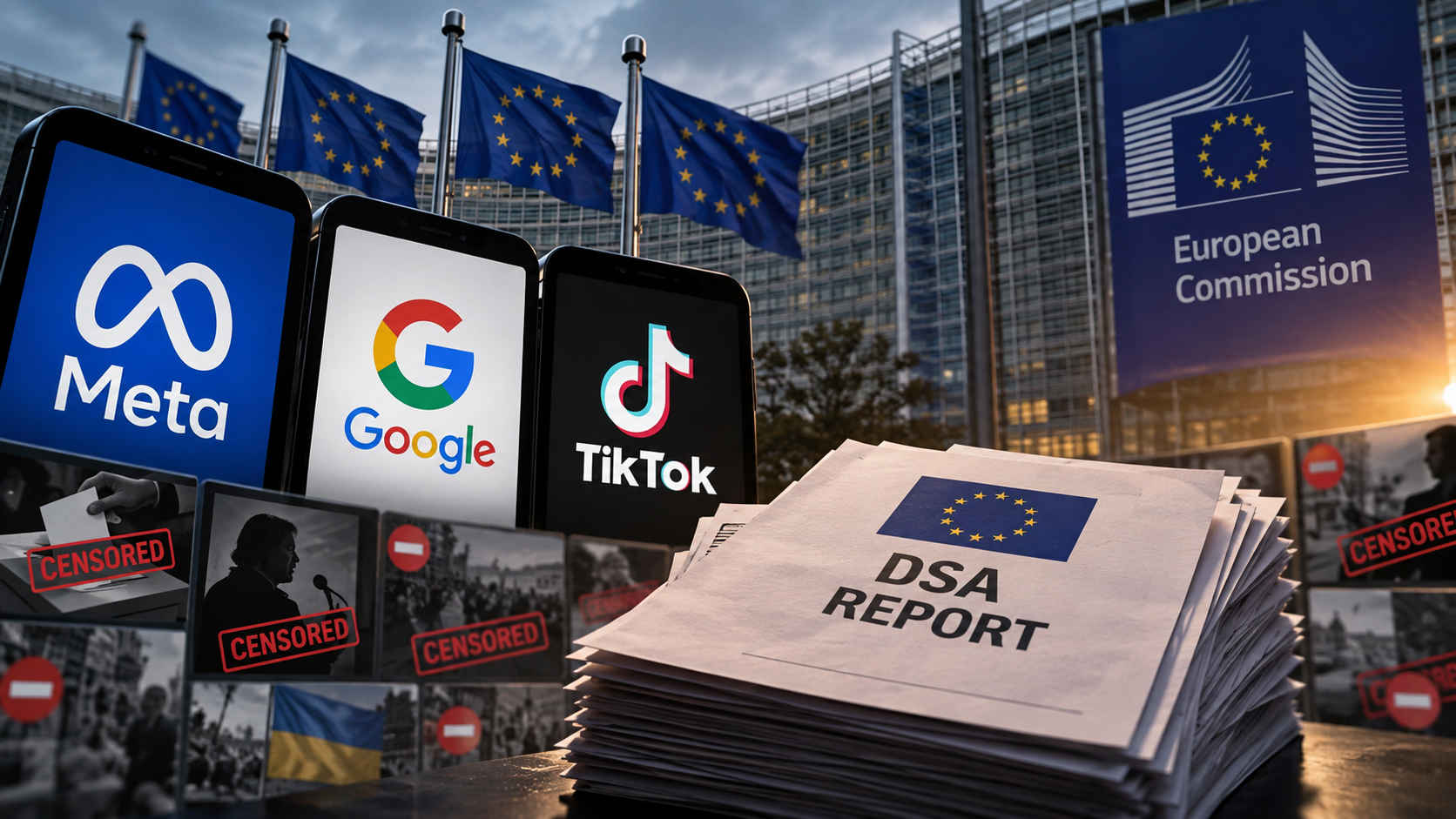
Major technology companies have submitted extensive reports to the European Union outlining how they moderate online content under the bloc’s Digital Services Act (DSA) and related disinformation rules.
The European Commission published reports from Meta, Google, TikTok, Twitch and more than two dozen other platforms on Wednesday. Running to hundreds of pages, the documents describe measures companies have adopted to identify, restrict and remove content considered false or misleading under EU standards.
The reporting forms part of the EU’s Code of Conduct on Disinformation, which has been integrated into the DSA framework. Participating platforms provide regular accounts of measures taken against disinformation, including their use of independent fact-checking organisations and automated moderation systems.
Political and election-related material features prominently in the reports. TikTok said it removed more than 500,000 posts connected with elections in Bulgaria, Cyprus, Denmark, Hungary, Malta, Portugal and Slovenia during the year.
The reports also describe extensive reliance on fact-checking organisations. Meta said material identified as false by fact-checkers can have its distribution reduced, while YouTube outlined the use of automated systems designed to detect content that may breach its policies.
The platforms also bear costs associated with their fact-checking programmes. According to the material, more than 14 million Facebook posts were flagged by fact-checkers during the first six months of 2026.
The Russia-Ukraine conflict is another significant area of moderation. Facebook said posts concerning the war are monitored for misinformation and disinformation, while restrictions remain in place on Russian state-linked media outlets.
The disclosures come amid an ongoing dispute over the reach of European online regulation. Supporters of the EU framework argue that stronger oversight is necessary to address harmful or deliberately deceptive material, particularly during elections. Critics, including some US lawmakers, contend that the rules risk placing excessive pressure on technology companies to restrict lawful political expression.
The debate is also complicated by the broad use of the term “disinformation.” Although the concept appears repeatedly throughout the EU regulatory framework, questions remain over how disputed or politically contentious claims should be classified and who should ultimately determine their accuracy.