
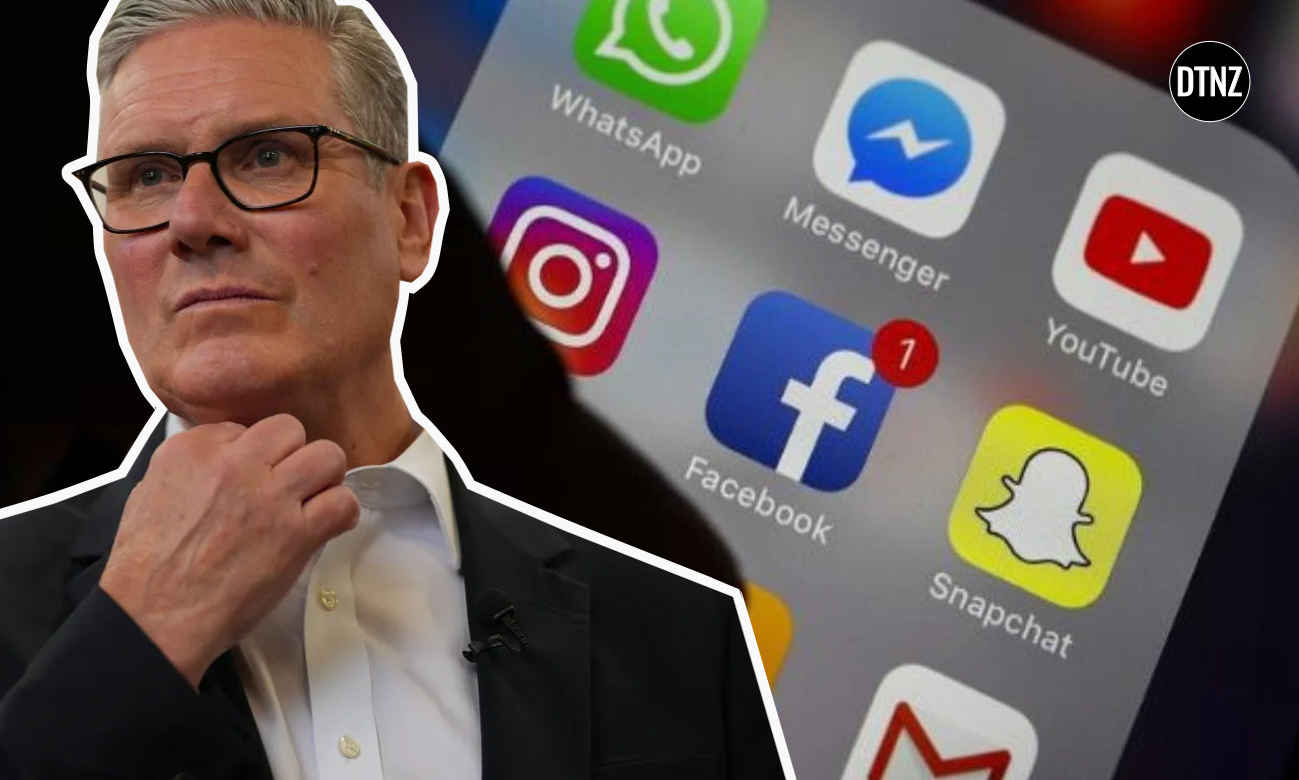
A coordinated push is unfolding across multiple countries moving to ban under-16s from social media.
The speed and alignment of the shift have critics watching the enforcement mechanism.
In the UK, Prime Minister Keir Starmer issued an ultimatum at London Tech Week on 8 June: build device-level controls to stop children taking, sharing or viewing nude images, enable them by default on every phone and tablet, or face legislation. “Because tech should adapt to the needs of society, not the other way around,” said Starmer, setting a September deadline. He framed opposition as a threat to child safety, declaring: “This government will not stand by while children are put at risk online”.
The stated aim is to stop children accessing pornography and sharing nude images, a goal few would argue with. The problem is the method: the demand requires software that inspects every photo on a device, which is effectively spyware at an operating system level. The EU rejected the same approach, known as “client-side scanning,” in March. Germany refused it on constitutional grounds. Even Apple, which proposed a similar system in 2021, abandoned it after backlash.
Starmer is also expected to announce broader social media restrictions for under-16s in the coming days, though whether this matches Australia’s blanket ban or takes a more limited approach remains unclear. Director of Big Brother Watch, Silkie Carlo, told GB News the plan is “effectively I.D cards for the internet”.
Australia’s ban is already failing: 61% of banned teens still hold accounts, and 70% say getting around restrictions is easy. Canada tables its version today, requiring platforms to verify ages through government-approved methods. Once legally required to know who is under 16, they must build systems capable of checking everyone.
Malaysia’s ban took effect last week, meaning any platform with more than 8 million users must now verify users are over 16 through government-backed eKYC identity checks, or face being blocked entirely. In Japan they are not banning anyone yet, however a proposal to link social media accounts directly to mobile phone records so platforms know exactly who you are is being looked at.
What remains largely unanswered by policymakers is how platforms can reliably determine who is under 16 without first establishing the identity or age of every user. The technology required to exclude minors is, by its nature, technology capable of identifying adults as well.
The hard truth is: the infrastructure being built, masquerading as child protection, is the same infrastructure that enables digital ID for everyone. Read more at ITV, Reuters, Reclaim the Net, Global News, HornbillTV, GB News on X and Watch Keir Starmer at London Tech Week.
This story has been republished with permission from RCR Bites. For news like this direct and free to your Inbox every day, go to biteme.news to sign up for RCR Bites.


It’s important to remember- these kids who are being banned from (anti) Social Media will be voting in a few years time, or two (s)election cycles on the average…
The governments could care less about online bullying, suicides as a result of the same, etc.
What they government is concerned about is that when things fall apart, (as they will shortly in the social, political, economic spheres…) that the kids will use (anti) Social media to coordinate militant civilian ops and coordinated attacks against the Banksters, Zionists and ‘compromised by Israel’ Government stooges!
The Gangs also use the Gangsta Wannabee Kids to run drugs and present instructions to other Gang Members via (anti) Social Media or in person, as one cannot prosecute an under 18 as would otherwise happen to an adult.
Most adult parents will figure out a way around the (anti) Social Media ban via burner phones, software changes, so that their kids can contact them in an emergency or when an illegal immigrant armed with a knife, machete, etc. starts to stalk them!
Until the forced 3G shutdown, and prior to that, the phase-out of the analog phone, we had a 3G flip phone that was 14 years old!
The new phones that are supposed to be for kids and senior citizens still have smart phone crap embedded in their programs, loaded with spyware, and are trackable in real time.
That is why we bought Farraday pouches that block government tracking, and eavesdropping on private conversations even when the phone is off!
If you have an old unusable microwave oven in the garage or closet that doesn’t work, then bring it out and store your phone inside, as the microwave 4G & up can’t penetrate the walls of the microwave, as it acts as a Farraday blocker.
SMS operates on a different frequency so those text messages could possibly come thru, but at least the microphone and cameras can’t be turned-on by a spying third party!!
And always place the phones with the camera lenses facing down…
“Because tech should adapt to the needs of society, not the other way around,” said Starmer.
The needs of “society” being authoritarian governments terrified that people are exposing their tyranny. All this will do is see people come together face to face, to exchange ideas and ultimately organise. Grass roots meetings in secluded locations, which will grow with time, fueled by oppression. This is far more dangerous in the long run to these technocratic neo dictatorships, than people letting off steam on line. Still, the trajectory of oppression is always the same and the outcome always pre-determined.
I notice this safety for children isn’t there in the same force over the Paki grooming gangs, that’s obviously fine by starmer.
“This government will not stand by while children are put at risk online”. but this government will stand by while grooming gangs rape hundreds of young women…..
Can’t a device just be set at purchase, or on an update for the child, and then not allow access to R12, R15 or R18 content – apps, games, websites according to age. Whatever is coming in/being accessed is screened by the device. And parent and schools educating kids on the importance of not sending inappropriate pictures.
A one time age/identity verification against the user/s of the device, confirmed by the parent/guardian.
Why doesn’t google or apples versions do this properly?
Dont let it happen. It is already proven our current governments support pedophiles. So the true reason to see your kids …… evil but true.
“The technology required to exclude minors is, by its nature, technology capable of identifying adults as well.” And this is what its really about. Getting us all onto a digital ID and then close the digital cage in an attempt to shut us up forever.
What is needed to reduce children from areas of the internet is all devices should be factory set at purchase. Unlocked by the manufacture upon age confirmation. But that will only minimise the problem. Binding a device to an individual is the government’s desire.
In the future a device is not connected, it will not fully function.
You are not anomalous on the internet. Your phone is listening 100% of the time just waiting to hear those words *Hey Siri”
All this is about legislation confirming who is using which device to say what to whom , what location, time, photo and video. Eventually monitoring your consumption. Artificial intelligence monitoring the lot. There is no need for your dishwasher to constantly be in communication to the internet.
Snowden revealed this invasion of personal privacy. Now he lives in Russia and can’t return home.
Starmer isn’t in the least bit interested in protecting children. If he was, he wouldn’t let those mongrels into the country .He is the mouthpiece for those who call the shots. They want full and complete access and identity of anyone using a device.