
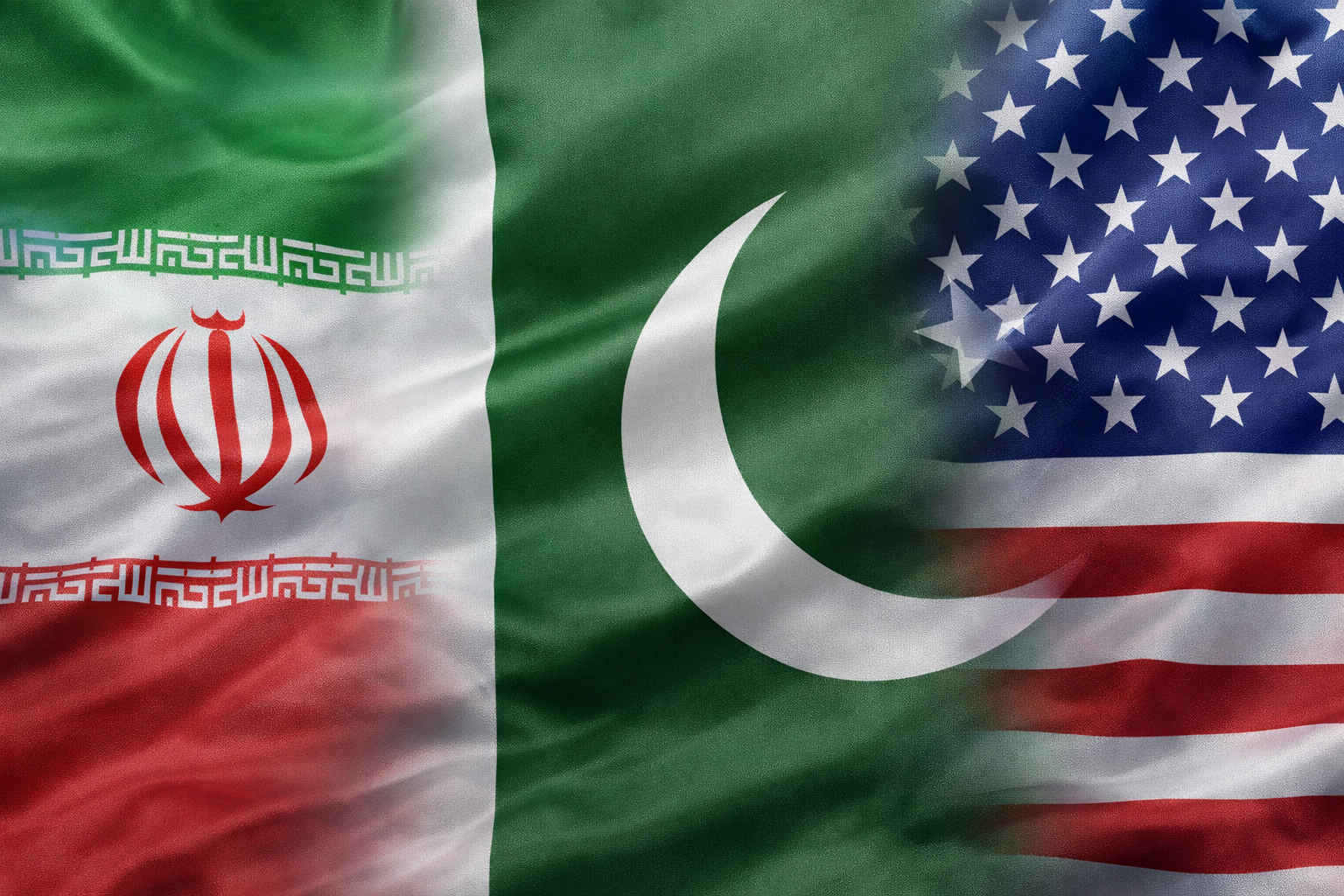
The Iranian, US, and Pakistani negotiators are reportedly meeting face-to-face.
The high-level talks involving the Iranian, US and Pakistani delegations in Islamabad are continuing into Saturday night, a senior White House official has confirmed to the press.
Parliament Speaker Mohammad Bagher Ghalibaf is leading the Iranian side; US Vice President J.D. Vance heads the American team.
Iran has arrived with a message of deep mistrust. Ghalibaf said Tehran has goodwill despite the US attacking Iran “twice within less than a year” in the middle of negotiations.
Vance struck a similar tone, saying earlier that he expects productive talks while warning Iran not to “play” the US.
US President Donald Trump has projected confidence and threat in equal measure, saying the Strait of Hormuz will be reopened “with or without” Iran’s cooperation, as he reportedly prepares military options in case the talks collapse.
“We don’t need a back-up plan… we’ve hit them hard, our military is amazing,” Trump told journalists after wishing Vance good luck.
Talks have hit a “stalemate” over which power will control the Strait of Hormuz, with Tehran insisting that it can charge a toll through the key waterway, according to the Financial Times.
Trump has summed up what a good deal with Iran looks like, saying: “No nuclear weapon. That’s 99% of it,” while adding that the Strait of Hormuz “will open automatically.”
Iran’s team reflects how broadly Tehran is framing the negotiations, reaching far beyond a narrow nuclear discussion. Alongside Ghalibaf are Foreign Minister Abbas Araghchi, who is heading the political track; Abdolnaser Hemmati, leading the economic side; Ali Akbar Ahmadian, overseeing the military file; and Esmaeil Baqaei, handling legal matters.
The US side appears narrower, with Trump envoy Steve Witkoff and Jared Kushner also expected in Islamabad, although public reporting has offered few confirmed details about the delegation’s composition.

The mistrust doesn’t matter and good journalism should be able to see through this. There is no need for any trust to exist in order to negotiate in good faith. Treaties are made between enemies, not friends. Negotiating in good faith can lead to making a treaty if the good faith exists and continues. But if one side keeps sabotaging the negotiations then it’s pretty obvious they don’t care about good faith and actually want more war.
Oh they want war, the problem is they literally can’t afford it. They will settle on skirmishes instead.
Others agree with you – that these negotiations are just “theatre for western media”, that Iran should not rely on any guarantee which is all a lie, that “as long as Israel exists they (Iran) will be attacked again and again, and the U.S. will help it, and everything they rebuild will be destroyed” https://www.tehrantimes.com/news/525265/Negotiations-are-theatre-as-Trump-seeks-exit-from-war-says
Iran has sent skilled diplomats, the US mostly the equivalent of diplomatic chimpanzee’s…..
It’s obvious to the Middle East that being America’s ally is more dangerous than being its enemy https://www.tehrantimes.com/news/525369/A-leaky-umbrella-The-fraying-myth-of-US-security-pacts
There is no return to any old normal. NZ really really needs to extract and refine our own oil and gas because our Reserve Bank does not have the tools to deal with longterm inflation expected by this report https://www.tehrantimes.com/news/525362/Economic-consequences-of-US-Israeli-attack-on-Iran-ensuing