
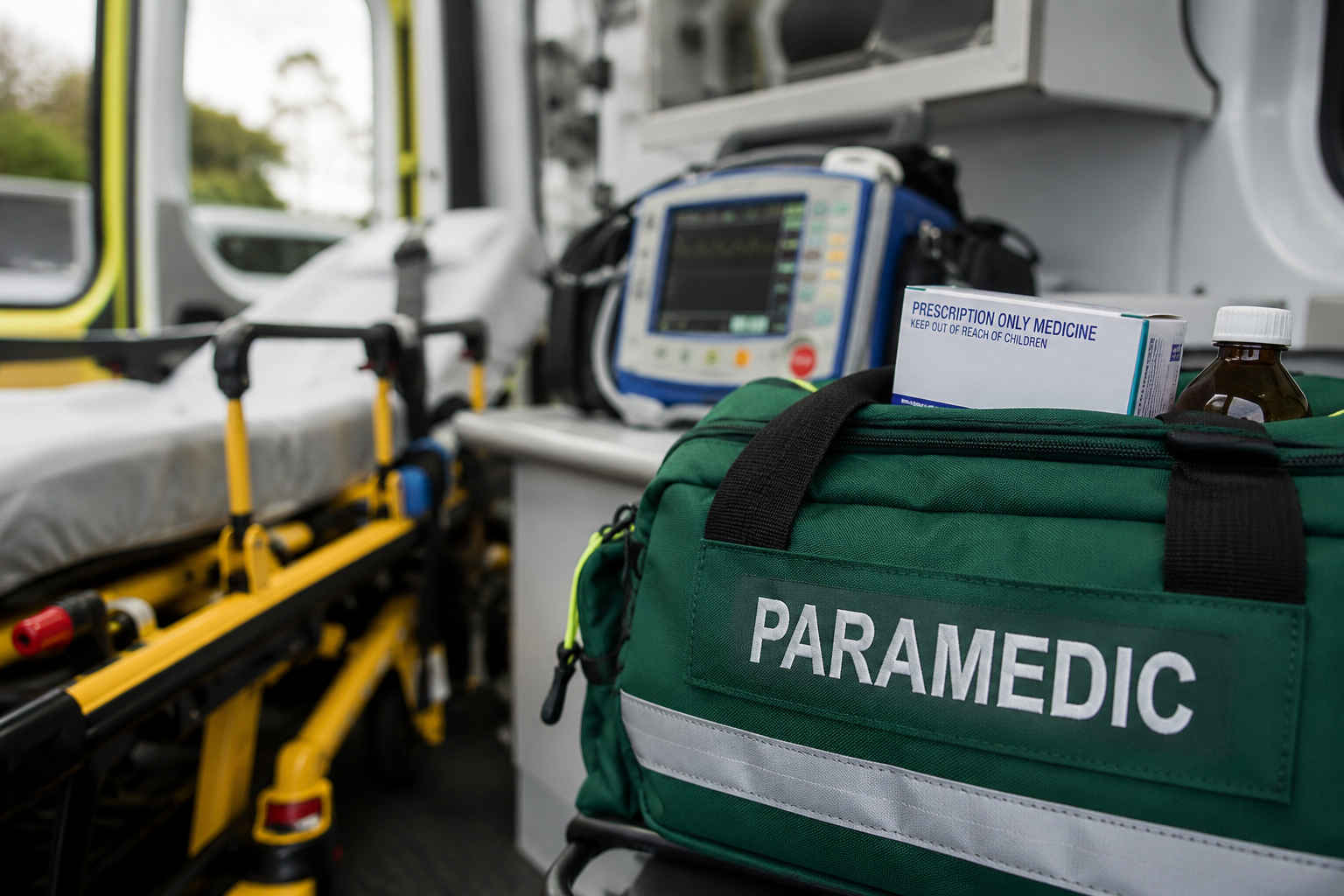
Paramedics will soon be able to prescribe certain medicines directly to patients under planned Government changes aimed at improving access to healthcare and easing pressure on emergency departments.
Health Minister Simeon Brown announced the move, saying the expanded powers would better reflect the growing role paramedics play in delivering care beyond traditional ambulance services.
Currently, paramedics can administer some medicines under standing orders from authorised prescribers but cannot issue prescriptions themselves. Brown said the existing system creates unnecessary administrative hurdles and can result in patients being referred to hospitals or other healthcare providers simply to obtain medication.
“Giving paramedics the ability to prescribe medicines will enable them to provide more complete care when it is clinically appropriate,” Brown said. “This will be particularly beneficial for people living in rural and remote areas.”
The proposed changes would allow suitably qualified paramedics to become designated prescribers under the Medicines Act 1981. Those who complete the required training would be able to prescribe from an approved list of medicines within their professional scope of practice.
The Government says the change will help patients access treatment more quickly and improve continuity of care, particularly in community and aged-care settings where paramedics are increasingly providing frontline healthcare services.
The Ministry of Health has begun consulting on which medicines paramedic prescribers may be authorised to prescribe. Potential medicines under consideration include treatments for common infections, pain relief, asthma inhalers, diabetes medications, and medicines commonly used in urgent care settings. Some controlled drugs may also be included, although this would require additional regulatory changes.
The Paramedic Council will develop a new prescribing scope of practice and establish education and training requirements for paramedics seeking prescribing authority.
Brown said the initiative forms part of the Government’s broader strategy to make better use of New Zealand’s healthcare workforce and improve patient access to timely treatment.
“These changes will help reduce pressure on emergency departments and hospitals, support more care in the community, and ensure patients receive the treatment they need sooner,” he said.


Brilliant idea especially if it means GP Practices can’t hit you with a hefty admin charge for when they prescribe/ GP’S GOT VERY UPSET ABOUT THOSE WANTING TO TAKE UP THE 12 MONTH PRESCRIPTION BECAUSE OF LOSS OF THIS ADMIN CHARGE AND ALMOST ALL OF THEM PUT THIS CHARGE UP IN PRICE. So much for helping those who have a prescription for life, greedy pigs.
BUT- Ambulance crews may also be able to euthanise patients as they deem necessary in the near future!
Homeless, Got low Social Credit scores? Are you Politically IN-Correct?
Here…let’s get that IV of potassium started….there…that’s better…it’ll be all over soon, and you won’t have any more problems, and the WEF-based Zionist Government won’t have to deal with you anymore!!
Your remaining Social Credit Score and your CBDC’s and the Human Dog Kennel that you’re living in will now go to a spineless, compliant ..’Citizen’..!
But don’t worry- you’ll also serve the purpose of alleviating hunger when we convert you into Soylent Paste, with youe bones being ground to fertilise the communal gardens attended by the brain-implanted Zionist Zombies! (aka ZZ’s)!
unnecessary administrative hurdles feeding only parasitism
This is all well and good but some people may miss out on life saving care. I recently had my first trip in an ambulance and the paramedic was unable after 3 attempts to get an IV line in. Luckily in was ok but they need a bit more train with some things. Not sure I’m ok with them triaging everyone before they get to hospital 🤔
These same paramedics saw all the poison shot sudden death pre-meditated murder bader test. AND SAW NOTHING
Now how emboldened are they?
These are the clown dancers in those covid videos.
👍
Good point. Our local volunteer fire siren was going 3 times a day during covid, instead of 1-3 times a week as was usual.
This is pretty scary.