
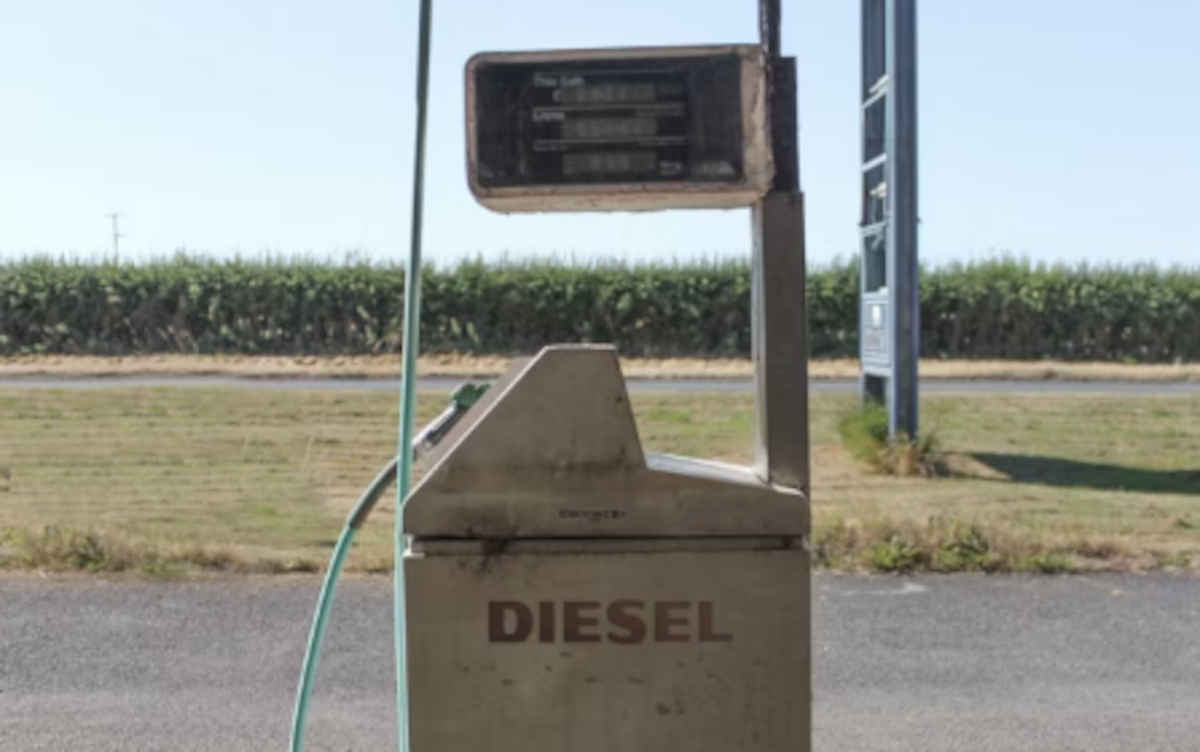
US diesel prices have climbed to a record high as global supply disruptions and instability in the Middle East put additional pressure on fuel markets.
The national average reached $6.5107 per gallon ($1.72 per litre) on Monday, according to figures cited from the American Automobile Association (AAA), compared with $6.23 a week earlier and $5.58 a month ago. The price is now approximately 76% higher than a year ago.
Supply conditions have tightened amid the conflict involving the United States and Iran and disruption to energy movements through the Strait of Hormuz. Developments in Yemen have also increased uncertainty surrounding shipping through the Bab el-Mandeb Strait and the movement of Saudi oil exports.
Further uncertainty surrounds Washington’s approach towards Iran. President Donald Trump said over the weekend that he was considering a range of options, including military action, economic measures or a negotiated agreement. He also indicated that he was open to meeting Iranian President Masoud Pezeshkian during the UN General Assembly in New York.
Iran’s Islamic Revolutionary Guard Corps has warned that another US attack could result in Tehran broadening the geographical scope of the conflict and deploying additional weapons.
Trump has separately urged Vladimir Zelensky to stop Ukrainian attacks on Russian oil refineries, arguing that reduced Russian refining capacity is contributing to the international diesel shortage. On Monday, he again referred to damage sustained by a number of Russian refining facilities.
At the same time, the United States has increased economic pressure on Moscow. Trump signed legislation on Friday targeting Russia’s energy and defence sectors and oil-shipping network, while allowing tariffs of up to 100% to be imposed on major purchasers of Russian oil and gas.
Diesel plays a significant role in the US economy because it is widely used for freight transportation, agriculture and heavy machinery. Sustained increases in diesel prices can raise production and distribution costs, potentially contributing to broader inflation.
The price increase comes as the Federal Reserve continues to address elevated inflation. Last week, it increased its benchmark interest rate by 25 basis points to a range of 3.75% to 4%, the first increase since 2023. Federal Reserve Chairman Kevin Warsh said inflation remained above desired levels and had persisted for an extended period.
Image credit: Rob Wingate


Price and availability are two different things and a universe apart
The good news is cheaper grocery prices are coming
Sure they are. A couple of weeks ago we had approx 55 days of petrol, diesel, jet fuel.
Yesterday when I checked we we about 38 days. Why is the media quiet about this?
Trump’s theory of the impact of Ukrainian attacks on Russian oil refineries has been debunked by Larry Johnson – ex CIA analyst – as a convenient distraction and false claim
Not sure why people call this blinded cyclops loose in the China shop President?
That goes in the too hard basket
Reminds me of what Greg Hallett said about Ardern
“Everything that comes out of her mouth is a lie”
If it is in fact a her
There’s no such thing as “ex-CIA” by the way.
Hate the orange one all you want, but be careful whose BS “debunking” opinions you buy.
Andy Burnem makes his debut
UK to help refuel Saudi jets countering Houthi attacks
https://www.youtube.com/watch?v=z6Wuxj6iNE0
Burnhem may end up being more of a clown than his predecessor if he hasn’t already
Keir Starmer Caves to US Pressure, Allows Strikes on Iran to Save British Lives
Very hard to fathom fu*kwits of which there is a copious supply
U.S. Truckers are going on Diesel Strike on October 1st 2026, or so it’s been reported.
https://www.youtube.com/watch?v=9npF8xJbJAM
JB Hunt, and Wal Mart are both Arkansas companies. Both have destroyed the Trucking Industry, and isn’t it amazing that many of the ‘Global Problems’ that we now have stemmed from an Arkansas base, ir the Clintons, unlivable wages, massive addictions, and assassinations?
https://www.youtube.com/watch?v=cSrEz2zZkEg
https://www.youtube.com/watch?v=uDPwJquDhTI
The Walton Family of Arkansas; this ain’t John Boy’s clan…
https://www.youtube.com/watch?v=lcCfkKziWa8
The obsessive american need to hide the truth by removing freedom of speech and obstructing freedom of any independent media https://www.tasnimnews.ir/en/news/2026/09/22/3703200/us-denounced-for-visa-denial-for-iranian-media-team
The quintessential hypocrisy – “A nation that once took pride in tearing down the Iron Curtain now finds itself standing behind one of its own”
Bob Moriarty is the founder of 321gold.com, a popular website which features articles, editorial opinions, pricing figures and updates on current events affecting precious metals. Previously, Moriarty was a Marine F-4B and O-1 pilot with more than 820 missions in Vietnam. He holds 14 international aviation records
https://marketsanity.com/bob-moriarty-i-have-never-seen-anything-like-this-diesel-fuel-crisis-you-were-warned/