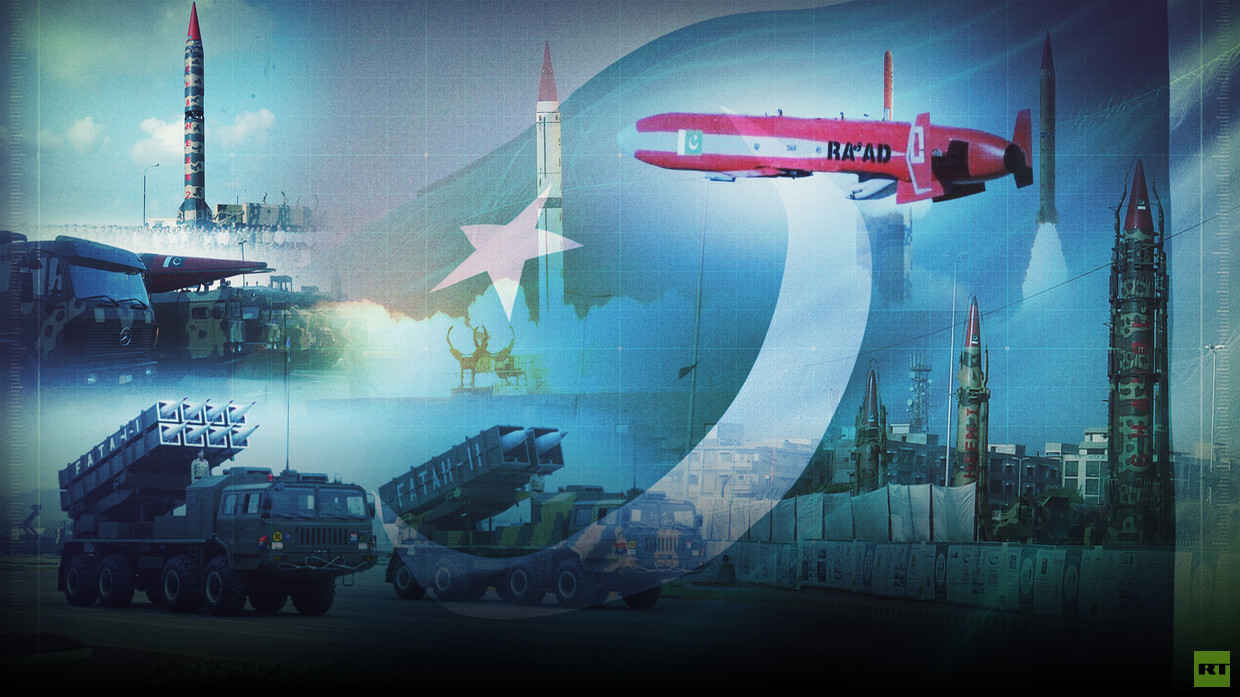
From early SCUD-inspired systems to modern Shaheen and Babur missiles, Pakistan’s arsenal has matured into a credible strategic threat.
War has erupted between Afghanistan and Pakistan. On February 27, 2026, the Taliban authorities in Kabul announced a massive retaliatory strike against Pakistani military positions along the disputed Durand Line, while Islamabad declared that “open war” is now underway. What began as border clashes has escalated into the most serious military confrontation between the two neighbors in years – raising urgent questions about how far the conflict could spread.
It would be a mistake to dismiss this confrontation as just another remote border skirmish in a distant corner of the world. Pakistan is a nuclear-armed state with one of the most dynamic missile programs in Asia – a force structure that inevitably shapes every military crisis Islamabad faces.
Pakistan is primarily focused on establishing a military force capable of countering India, with the goal of deterring aggression and advancing its own ambitions in the region. Pakistan’s nuclear and missile programs are also designed to potentially confront its long-term rival. Its efforts are supported by several steadfast allies and partners. However, the sudden escalation on the Afghan border underscores a broader reality: Pakistan’s missile arsenal is no longer just a theoretical deterrent in a distant rivalry, but a part of a volatile regional equation.
In this article, we take a closer look at Pakistan’s missile capabilities, their range, strategic logic, and what they mean for regional stability at a time when the risk of miscalculation is rising.
Foreign technologies and the making of Pakistan’s missile arsenal
Pakistan’s missile program is inseparable from its nuclear program. Pakistani nuclear physicist Abdul Qadeer Khan, known as the “father of Pakistan’s atomic bomb,” received designs for nuclear warheads from China, and is said to have passed them on to Iran and North Korea. This laid the groundwork for scientific and technical cooperation that contributed to the advancement of Pakistan’s missile capabilities.
Pakistan’s missile program goes back to academic research and the creation of geophysical rockets based on the French Eridan rocket. In the 1980s, several French companies collaborated with Islamabad on projects aimed at developing sounding rockets for atmospheric probing. In 1987, after learning about India’s progress in ballistic missile technology, Pakistan made a political decision to build its own missiles. This decision transformed the initial geophysical rocket projects into the first operational tactical solid-fuel missile, Hatf-1, with a range of 70 kilometers. In 1992, this missile entered service with the Pakistani Army. Later, its range was extended to 100 kilometers. Today, over 100 such missile systems are deployed in Pakistan.
During the 1990s, under Prime Minister Benazir Bhutto, Pakistan actively partnered with China and North Korea in missile development. This collaboration involved scientific exchanges and training programs for specialists and students. It significantly impacted the development of Pakistan’s missile technology.
In the early 2000s, North Korea gave Pakistan missile systems analogous to Soviet SCUD missiles, with a range of about 300 kilometers. The acquisition of these systems enabled Pakistan to train military personnel in missile operations and begin constructing its own missile defense shield. Experimental work on liquid-fueled engines, initially developed in North Korea, also commenced at this time.
Around the same time, Pakistan gained access to technologies used in the development of North Korea’s NoDong-A medium-range missile. This missile significantly differed from the copies of Soviet SCUD missiles and elevated North Korean missile engineering to new heights.
It is believed that the NoDong-A missile was based on the Soviet R-21 submarine-launched ballistic missile. It was probably built with the help of experts from Russia’s Makeyev Rocket Design Bureau who were recruited by North Korea during the 1990s. These missiles also likely carried North Korea’s first nuclear warheads. For Pakistan, the capability offered by a missile with a range of 1,500 kilometers was crucial, as it provided the means to strike nearly any target in India, should such necessity arise.
Pakistan’s next missile was the solid-fueled Abdali-I missile, also known as Haft-II. This missile, launched from MAZ-7310 chassis, marked the beginning of Pakistan’s long-term partnership with Belarusian automotive manufacturers. Slightly larger than the Haft-I missile, the Abdali-I boasted a range of 450 kilometers; this was a non-nuclear missile with an average accuracy of around 150 meters. Testing began in the early 2000s, and the missile was deployed in 2005. Missile systems of this class and above are managed by Pakistan’s Strategic Forces Command – a special branch of the country’s armed forces.
The technologies used in North Korea’s NoDong missiles facilitated the development of Pakistan’s first truly strategic missile – the Ghauri missile, also known as Haft-V. Pakistan successfully replicated both the North Korean missile and the mobile transporter erector launcher. In 1996, the Clinton administration accused Pakistan of transferring nuclear technology to North Korea, suggesting that Pakistan may have gained access to the North Korean missile program in return. Such fears were fueled by the development of the Ghauri missile. The first test launch of this missile occurred in 1998, and was followed by several years of refinements to ensure the warhead could reach its target intact. Early tests faced challenges, as the warheads burned up in the atmosphere due to Pakistan’s insufficient experience in designing ballistic systems capable of withstanding such speeds and stress.
However, that’s not all. In 1998, during Operation Infinite Reach against Al-Qaeda in Afghanistan, the US deployed Tomahawk cruise missiles. Some of these missiles didn’t reach their targets and landed in Pakistan. The Pakistani government kept this secret and reengineered the missiles. As a result, in 2005, Pakistan tested the Babur cruise missile. For many years, it was believed that the Babur was based on the Soviet Kh-55 cruise missile obtained from Ukraine, but this was not the case.
The Babur missile comes in several variants with ranges up to 900 kilometers. It can carry both conventional and nuclear warheads. The most advanced versions can utilize satellite navigation systems like Galileo and China’s BeiDou, ensuring high targeting accuracy. In 2018, the Babur-III variant was tested from a naval missile boat, and it was claimed that it may be used as an anti-ship missile. Overall, Pakistan is systematically expanding its missile programs to compensate for its relatively weaker navy compared to India.
Pakistan is also working on developing short-range tactical missile systems. In this regard, Pakistan closely collaborates with China – the two countries are united in their mutual interests against India. While it purchases some missile systems directly from China, Pakistan is also engaged in developing missiles independently, with the assistance of Chinese experts. Perhaps, Pakistan will develop a space launch vehicle next. The country has both the expertise and technology for such an endeavor; it is simply a matter of political will. Work in this area may already be underway.
By Dmitry Kornev, a military analyst and investigative journalist.