
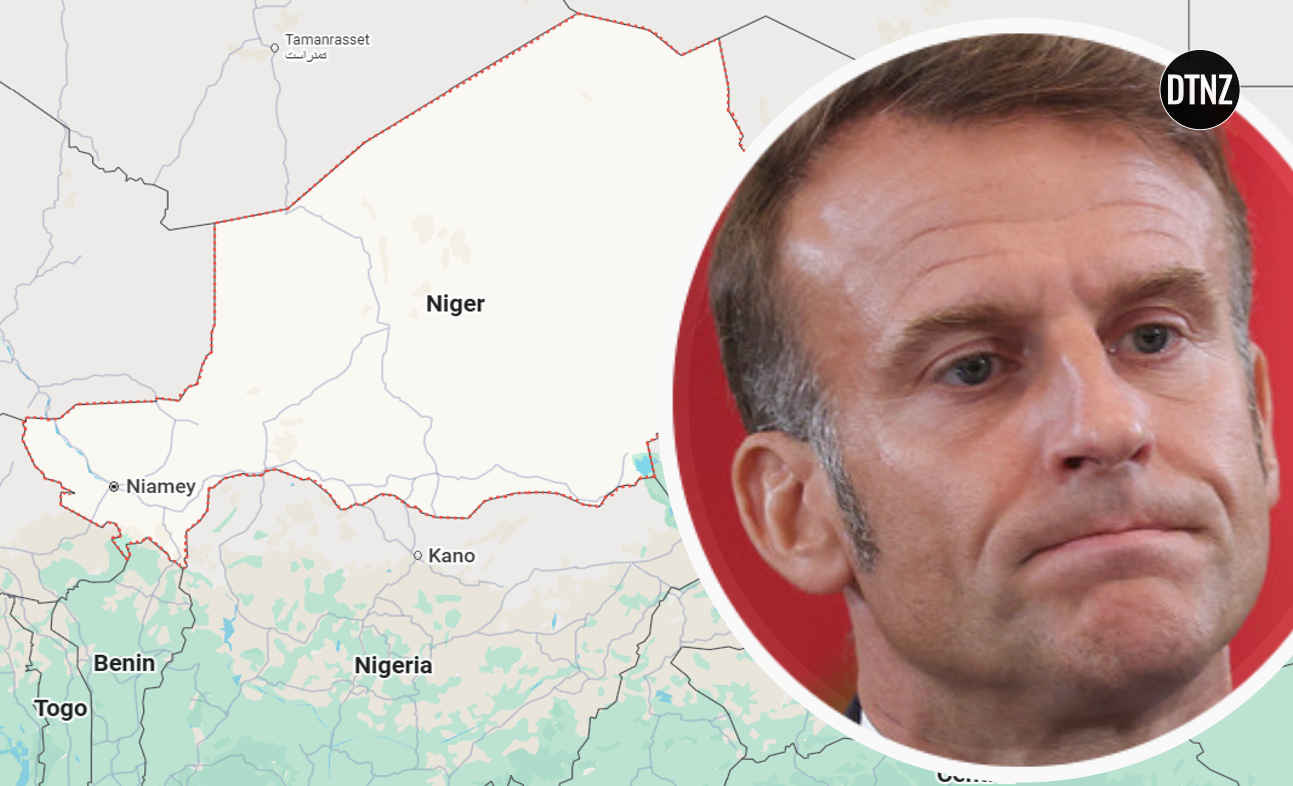
Niger’s military-led government has accused the administration of French President Emmanuel Macron of supporting a failed military uprising in Niamey last month, while Paris has rejected the allegation as “pure fantasy.”
The accusation was issued by Niger’s Council of Ministers following a meeting chaired by transitional leader Abdourahamane Tiani on Friday. The government characterised the August unrest as an operation with “international ramifications” and alleged that a network of collaborators led by the “French regime” had sought to destabilise the country.
Nigerien authorities claimed the soldiers involved had been encouraged to undermine the government and its efforts to strengthen national control over the country’s natural resources. The Council of Ministers said it had compiled “substantial documentation” concerning the alleged foreign involvement and reserved the right to pursue proceedings before international courts.
French Foreign Minister Jean-Noel Barrot rejected the claims on Saturday, telling RFI that France had “neither the intention nor the means” to organise such an operation and describing Niger’s allegations as “pure fantasy.”
The confrontation follows a mutiny launched by members of Niger’s Special Intelligence Battalion at Air Base 101, inside Diori Hamani International Airport, on the night of August 28.
According to Niger’s Defence Ministry, the mutineers detained fellow soldiers and fired on sensitive installations before moving towards the presidential palace. They were subsequently confronted by the Presidential Guard, with Nigerien authorities saying loyalist forces received assistance from Russia’s Africa Corps in suppressing the uprising.
Three members of the Presidential Guard were killed during the fighting, according to an official government statement.
Following the failed mutiny, Niger thanked countries that expressed support during the unrest, specifically naming Russia, Algeria and fellow members of the Alliance of Sahel States (AES). Algeria also deployed fighter, transport and refuelling aircraft to Niamey following the uprising.
Relations between France and its former West African partners have deteriorated sharply in recent years. Niger, Burkina Faso and Mali, which together form the AES, have repeatedly accused Paris of interfering in their domestic affairs and attempting to destabilise their governments, including allegations of French support for armed groups operating in the Sahel.


Macron is past his shelf life rudderless useless and dead in the water
New working feverishly as to how Le Pen can be headed off at the pass
Who is now going to have to run the gauntlet
Or was that the Pillars of Hercules?
The symplegades
The clashing rocks
Russia intelligence are assisting West African states. They have the receipts. Accusing Paris of interference without the evidence would create diplomatic incident, yet Macron has not said a word. Guilty much.