
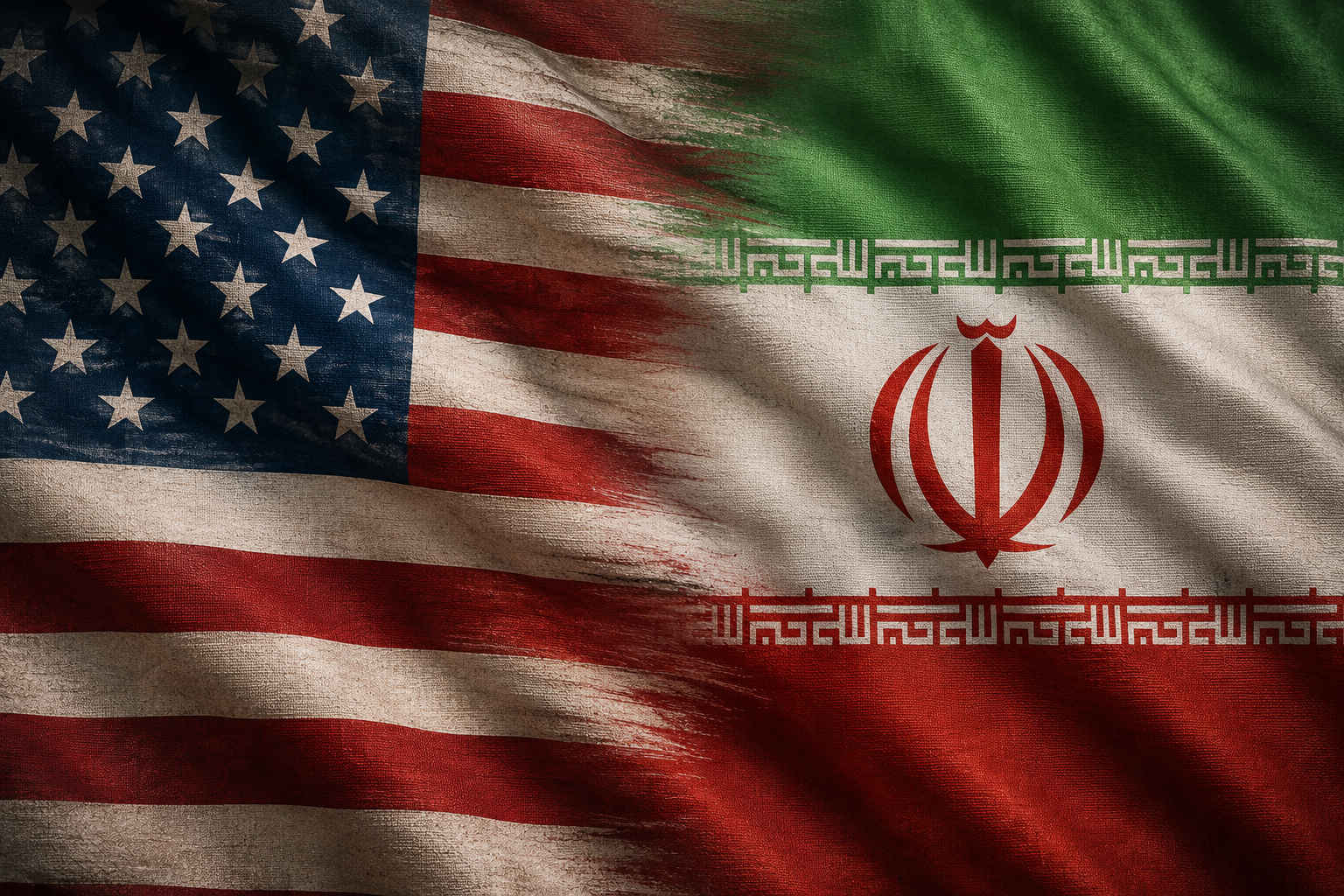
US President Donald Trump has declared the interim ceasefire agreement with Iran effectively finished, as American military strikes on Iranian targets and Tehran’s condemnation of the attacks have raised fears of renewed conflict in the Middle East.
Speaking alongside NATO Secretary-General Mark Rutte at the NATO summit in Ankara on Wednesday, Trump said he no longer believed Iran was negotiating in good faith. “For me, I think it’s over,” he told reporters. “As far as I’m concerned it’s just a waste of time.” He accused Iranian leaders of privately agreeing to terms before publicly denying negotiations had taken place, adding: “They’re liars… They can talk, but I think they’re wasting their time.”
The comments followed overnight US strikes against Iranian military and coastal monitoring facilities, with Washington saying the action was in retaliation for Iranian attacks on commercial shipping in the Strait of Hormuz. US officials said Iran had resumed attacks on commercial vessels despite an earlier understanding aimed at restoring maritime security following the recent conflict.
According to US Central Command, American forces struck more than 80 Iranian targets, including air defence systems, radar installations and vessels belonging to the Islamic Revolutionary Guard Corps that Washington said had been used to threaten international shipping. The United States also revoked a licence permitting Iranian oil sales that had been granted under the wartime memorandum of understanding.
Iran strongly rejected the US justification, with its Foreign Ministry describing the strikes as a “flagrant violation” of the memorandum of understanding that ended the recent war and accusing Washington of breaching its international obligations.
“The terrorist US army… committed military aggression against several monitoring and surveillance centers on Iran’s southern coast,” the ministry said in a statement. It argued the attacks violated both Article 2(4) of the United Nations Charter and the agreement’s commitment to halt military operations.
The ministry also said the US decision to revoke Iran’s oil export licence, alleged interference with arrangements in the Strait of Hormuz, and continuing Israeli military operations in Lebanon had rendered key provisions of the agreement ineffective. It warned that “the responsibility for the dangerous consequences of this escalation rests with the treaty-breaking US regime.”
Iran said its armed forces would respond under the right of self-defence provided by Article 51 of the UN Charter, stating they “will not hesitate in defending Iran’s territorial integrity, national sovereignty and national security against US military aggression.”
Iranian state media reported explosions near Sirik County and Qeshm Island in Hormozgan Province, with authorities saying a floating pier at Sirik Port suffered significant damage during the strikes. Port official Hamidreza Mohammadhosseini Takhti said one person was injured and three others were treated at the scene after two projectiles struck the port basin overnight. Iranian reports also claimed fishing vessels were damaged near Bandar Abbas, while the Islamic Revolutionary Guard Corps said one of its personnel was killed while confronting US drones in Mahshahr.
The memorandum of understanding, brokered by Pakistan and announced in June, had called for an immediate cessation of hostilities, negotiations towards a permanent settlement within 60 days, and temporary relief from selected US sanctions, including measures affecting Iranian oil exports.
With both Washington and Tehran now accusing each other of violating the agreement, prospects for renewed negotiations appear increasingly uncertain as tensions continue to rise across the Gulf region.

The Punch and Judy forever war continues. What a surprise. But then, we were always at war Iraneurasia.
Massive crowds throughout Iran and Iraq for the funeral procession of Khamenei. Humdreds of thousands if not millions. And alot of red flags in the crowds.
From Hindustan Times;
“The flag refers to the seventh-century martyrdom of Imam Hussein, the grandson of Prophet Mohammed and one of the most revered figures in Shia Islam.
Historically, the red flag is seen as a symbol that “innocent blood has been unjustly shed and that justice is still awaited”, as per the report.”
It is also seen as a symbol of revenge. Keep kicking hornets nest Trump! Is that what you are trying to acheive, a massive uprisingnof shia muslims?
The Al-Jazeera broadcast of trump’s meeting in Turkiye last night should alarm everyone, everywhere.
The lack of complex thinking, the wandering subject content, and the name calling that was worthy of a middle school student was alarming.
IT ALSO SHOWED THAT TRUMP IS NOT QUALIFIED TO HOLD OFFICE DUE TO MENTAL DETERIORATION!
Israel uses the sideshow to continue attacking and killing Palestinians in tent communities, and to also attack and destroy southern Lebanon.
We’re dealing with psychopaths on a global scale, and all of us must prepare ourselves and our families to deal with these mostly UN-(S)ELECTED MORONS with low cognitive awareness and IQ’s.
Lex Luxon, the minion, (look up ‘minion and see the true meaning…) has now reverted to doing the bidding of the WEF / WHO / JWO behind the backs of his ‘coalition partners’ in typical political tool fashion, seizing the opportunity for Mr. Modi to come to NZ when Winston is overseas.
The UNTRUSTWORTHINESS of Luxon is now blatantly on display, and these next 4 months will reveal his last-ditch efforts to please his Global Zionist Masters!
Just look at the comments from his double digit IQ supporters and you can see how Stump got into office. Trying telling them they have been duped and watch the verbal excrement fly! Their little red hats are cutting off all circulation to their brains.
Just another minor fire in the laundry https://halturnerradioshow.com/index.php/component/content/article/single-unconfirmed-report-u-s-destroyer-hit-by-iran-in-sea-of-oman-many-casualties-multiple-kia?catid=17&Itemid=101
Stumpenstein rampaging around again….